 arielwp@yahoo.com
 arielwp@yahoo.com


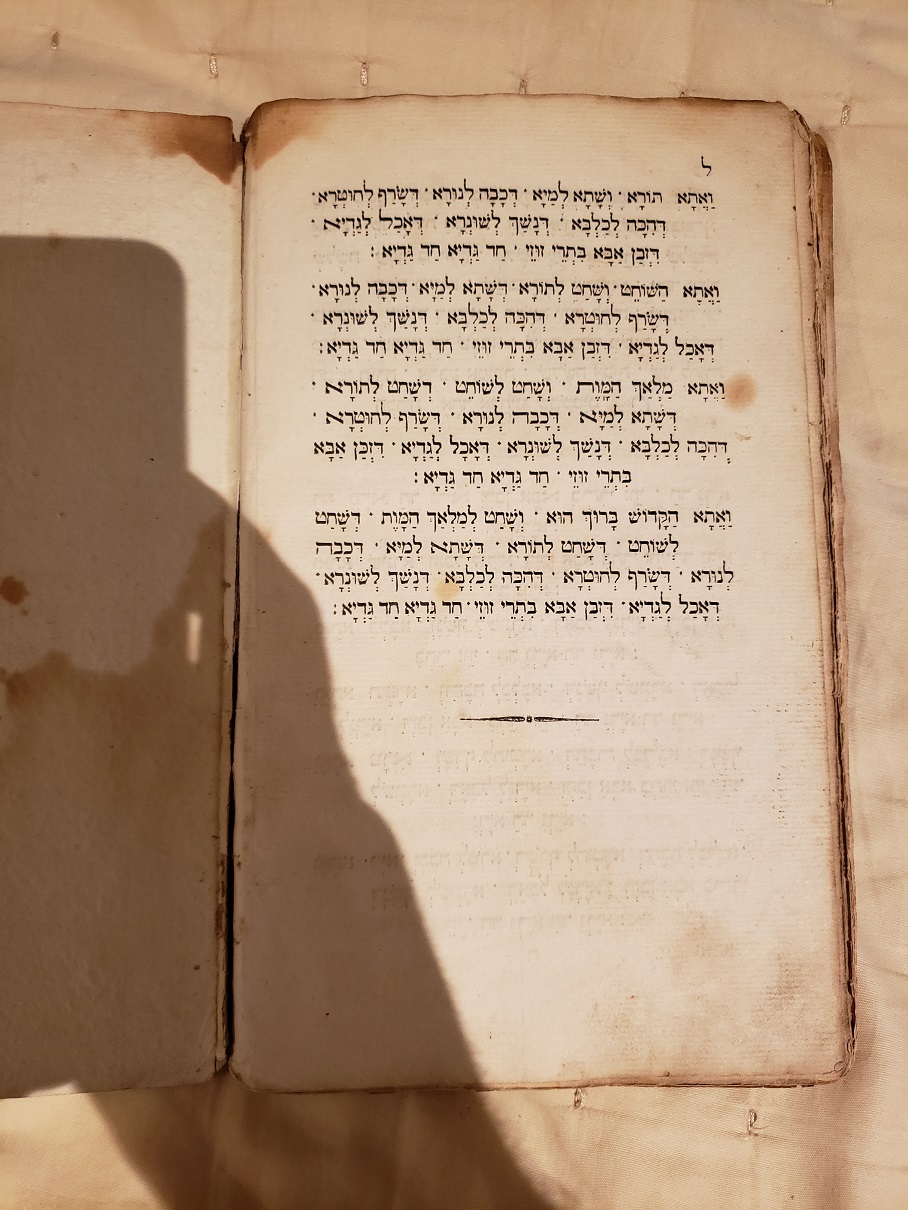
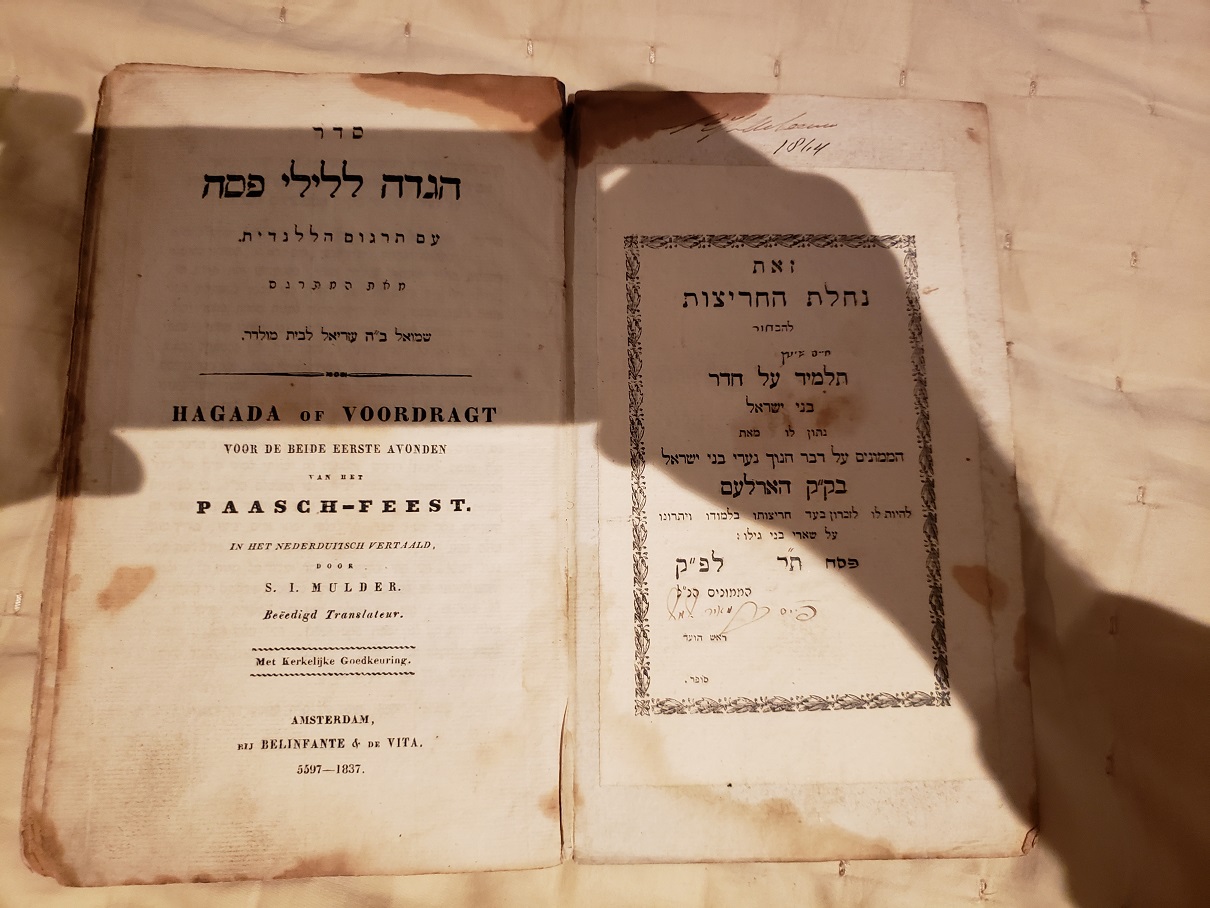
Yudlov 769 Haggadah Amsterdam 1837
Yudlov 769 Haggadah Amsterdam 1837
Publisher: Belinfante $ de Vita
A Haarlem Passover Merit Certificate Signed by Meir Lämel (1840)
Pasted into this 1837 Amsterdam Haggadah is an extraordinary Hebrew scholastic award dated to Passover 1840 (5600), issued by the Jewish educational authorities of Haarlem to a student named Chaim, whose surname appears to read Tzinitz, Zinitz.
The printed text praises the boy for his charitzut (“diligence”) and for surpassing the other children of his age in study. The certificate was issued “by those appointed over the education of the youth of Bnei Yisrael in the holy community of Haarlem,” preserving a rare glimpse into organized Jewish education in nineteenth-century Holland.
Particularly remarkable is the original handwritten ink signature at the bottom of the document, which appears to read:
מאיר למל
“Meir Lämel”
Beneath the signature appears the title:
ראש הוועד
“Head of the Committee”
If this reading is correct, the document may preserve an authentic contemporary signature of Meyer Simon Ritter von Lämel (1766–1845), one of the most important yet today largely overlooked Jewish philanthropists of early nineteenth-century Europe.
The Haarlem connection is especially compelling. Historical records confirm that Haarlem’s Jewish community maintained a charitable “school for the poor” during this exact period, supported by communal and municipal assistance. The certificate therefore appears to stand at the intersection of Dutch Jewish communal education and the broader network of transnational Jewish philanthropy emerging across Europe before emancipation had fully transformed Jewish life.
The honored student, Chaim, likely belonged to the growing population of Ashkenazic immigrant families arriving in the Netherlands from Central or Eastern Europe during the early nineteenth century. For such families, communal education offered one of the few avenues toward advancement, religious continuity, and social dignity.
Meyer Lamel was one of the most powerful and influential people in Europe, and yet today his legacy stems from his tireless interest and hands-on aid to Jewish education for the poor. This prize Haggadah is an example(I believe) of him personally involved in the recognition of an outstanding little boy, probably too poor to receive an education, in Amsterdam…and that is just amazing!!!!
Born in Bohemia, Lämel rose from modest origins to become one of the Austrian Empire’s leading wool merchants, industrialists, and financial advisers. During the Napoleonic Wars he repeatedly extended enormous loans and logistical support to the Austrian state, at one point reportedly placing his entire fortune at the government’s disposal during the French occupation of Vienna. In recognition of these services, Emperor Francis I elevated him to hereditary nobility in 1811 — an exceptional distinction for a Jew in the Habsburg Empire.
Yet Lämel’s importance extended far beyond finance. He became one of the pioneering figures of modern Jewish philanthropy in Central Europe, supporting educational reform, communal welfare, and campaigns to reduce discriminatory restrictions imposed upon Jews in Bohemia and Austria. His influence continued after his death through institutions established in his memory, most famously the Lämel School in Jerusalem.
Very few Hebrew scholastic awards from nineteenth-century Dutch Jewish communities survive today, and fewer still remain preserved in their original family context inside a Passover Haggadah. This delicate document is therefore not merely a school prize, but a rare witness to Jewish education, charity, migration, and philanthropy in pre-emancipation Europe.

SPECIAL


