 arielwp@yahoo.com
 arielwp@yahoo.com


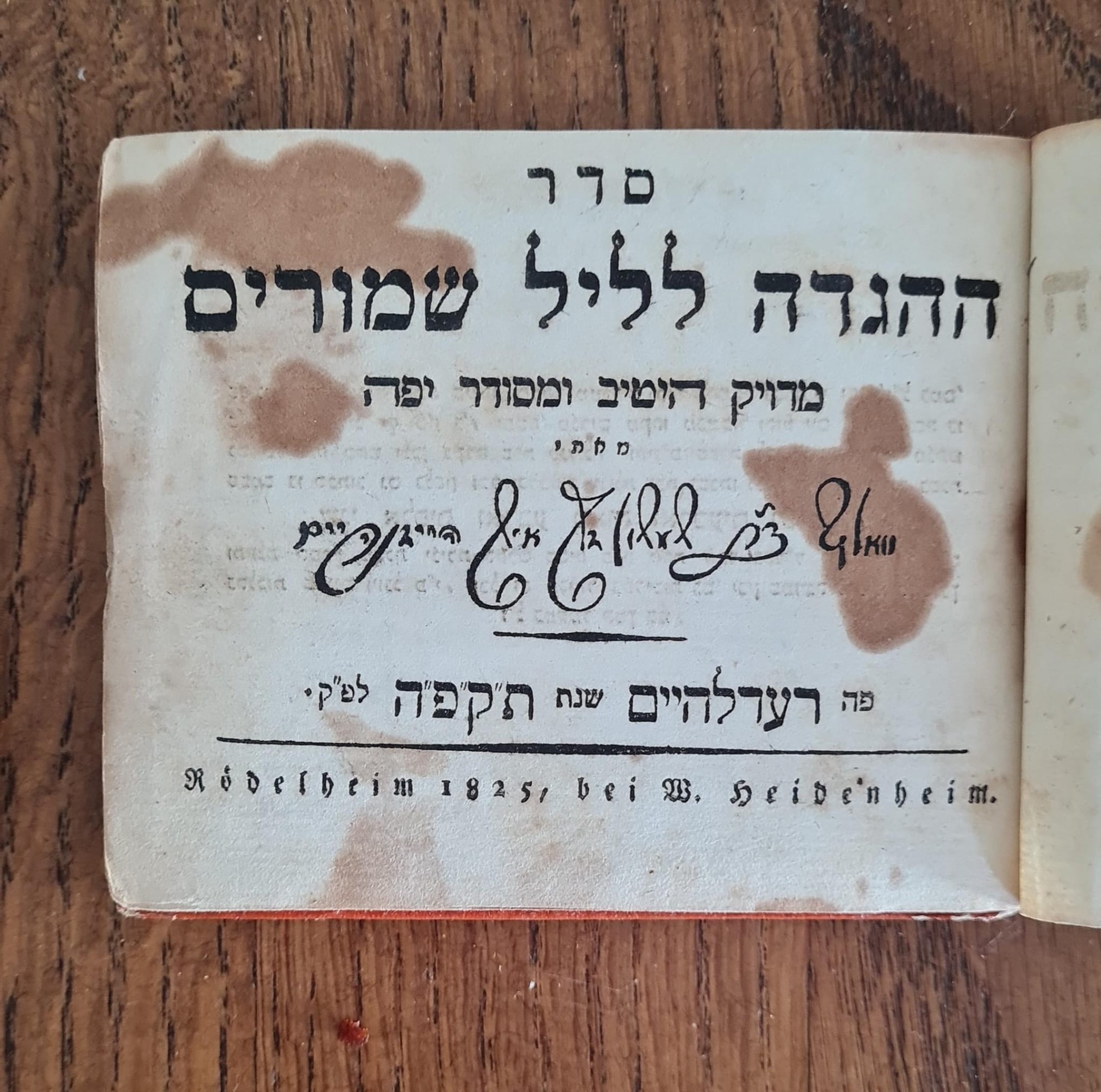
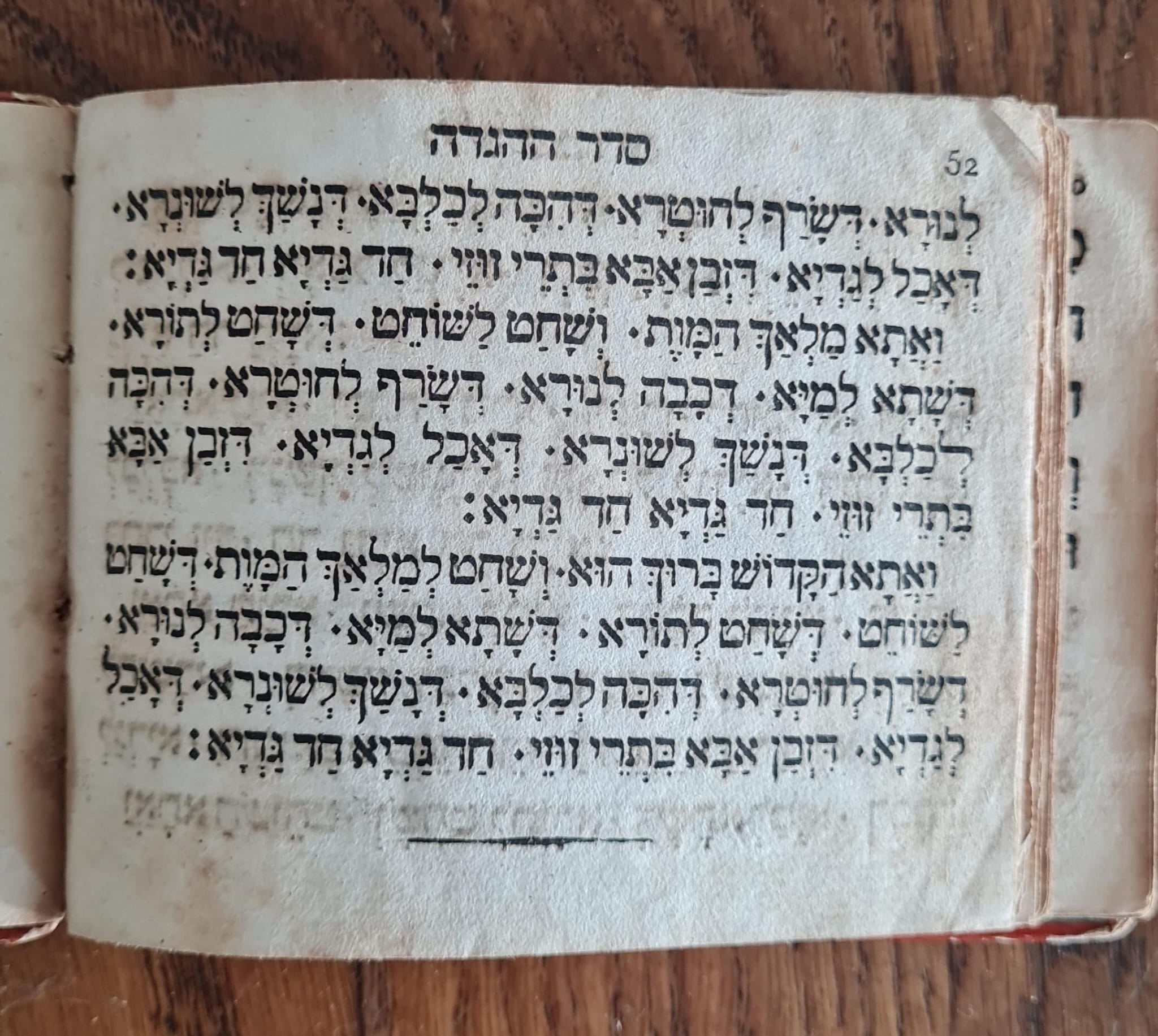
Yudlov 661 Haggadah Roedelheim 1825
Yudlov 661 Haggadah Roedelheim 1825
The Roosje Reizche Tal (née Rubens) Haggadah
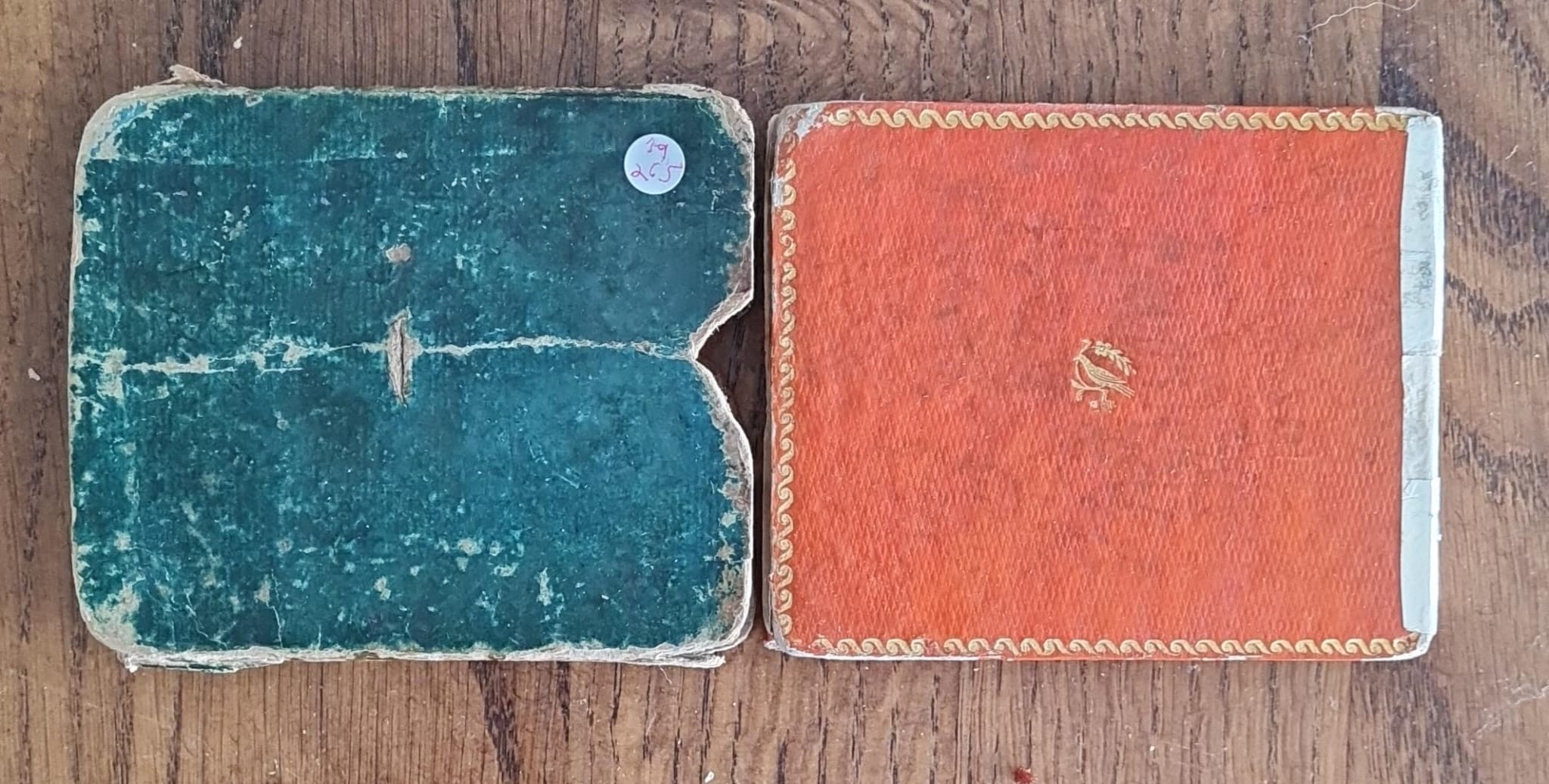
- This volume is a pocket-sized miniature Haggadah printed in Rödelheim, Germany, in 1825. It was published by Wolf Heidenheim, a renowned scholar and philologist praised for his precise Hebrew typography. This copy is a deluxe presentation variant. The orange textured cover features a gold-gilded grapevine border and a central gold-stamped crest depicting a bird—a typographic play on Heidenheim’s name (from the German Weihe, meaning hawk or kite). The book retains its original green paper protective travel slipcase, which rarely survives on utilitarian holiday books of this age.
The Handwritten Inscription
Written in household graphite pencil across the blank paper flyleaf, the two-line inscription is written in Western Ashkenazi cursive script (Vaybertsh):
שורה 1: רייזכה ב"ת כ"ה זלמן רובנס
שורה 2: אשת כ"ה צדוק טל
- Translation: “Reizkah, daughter of the honorable [community leader] Zalman Rubens; wife of the honorable [community leader] Tzadok Tal.”
The Rubens and Tal Families
Verified historical registries from JewishGen and Dutch-Ashkenazi vital records confirm the exact identities of the family members:
- The Owner: Roosje Reizche Rubens was born in 1817.
- The Father: Salomon Zalman Rubens was an affluent officer in the Amsterdam Ashkenazi community. He served as an executive for the Pekidim ve-ha-Amarkalim (The Society of Clerks and Administrators), an organization that managed international communal finances and charitable funds.
- The Husband: In 1846, Roosje married Zadok “Tobias” Tal (1815–1892), linking two established Dutch-Jewish merchant families.
The Rabbinic Lineage
Roosje and Zadok’s direct son became one of the most visible rabbinic leaders in 19th-century Western Europe:
- Rabbi Moses Tobias Tal (1847–1898): He served as the Chief Rabbi (Av Beit Din) of The Hague, Netherlands (and previously of Utrecht).
- His Work: Rabbi Tal was a traditionalist leader who published essays and engaged in public theological debates to protect traditional Jewish education and lifecycle laws in the Netherlands during a period of rapid secularization. This travel Haggadah was a quiet, constant fixture in his family home.
Documented Holocaust Records
Roosje Reizche passed away in old age and was buried on December 11, 1912, at the historic Zeeburg Jewish Cemetery in Amsterdam, decades before the Second World War. However, her grandchildren—the daughters of Chief Rabbi Moses Tobias Tal—were caught in the German occupation of the Netherlands:
- Hanna Tal (b. 1884): Roosje’s granddaughter remained unmarried and lived in The Hague. She was arrested, sent to the Westerbork transit camp, and murdered in the gas chambers at Auschwitz on January 25, 1943.
- Betty Tal (b. 1877): Her sister Betty was arrested alongside her, deported from the Netherlands, and murdered at Auschwitz on February 19, 1943.
- Survival: Other grandchildren, including her grandson Justus Tsadok Tal, survived the war through underground hiding networks, preserving the family papers that ultimately allowed this book’s history to be unlocked.
Conclusion
This 1825 Rödelheim Haggadah is a survivor of centuries of use. It traveled from the presses of Wolf Heidenheim to the home of the Amsterdam Jewish merchant class, sat at the Seder tables of the Chief Rabbi of The Hague, and outlived the family members who perished in Auschwitz. It remains anchored to the past by the soft pencil signature of the matriarch who took a moment to write down her name.

SPECIAL
HOLOCAUST
IRONID


