 arielwp@yahoo.com
 arielwp@yahoo.com


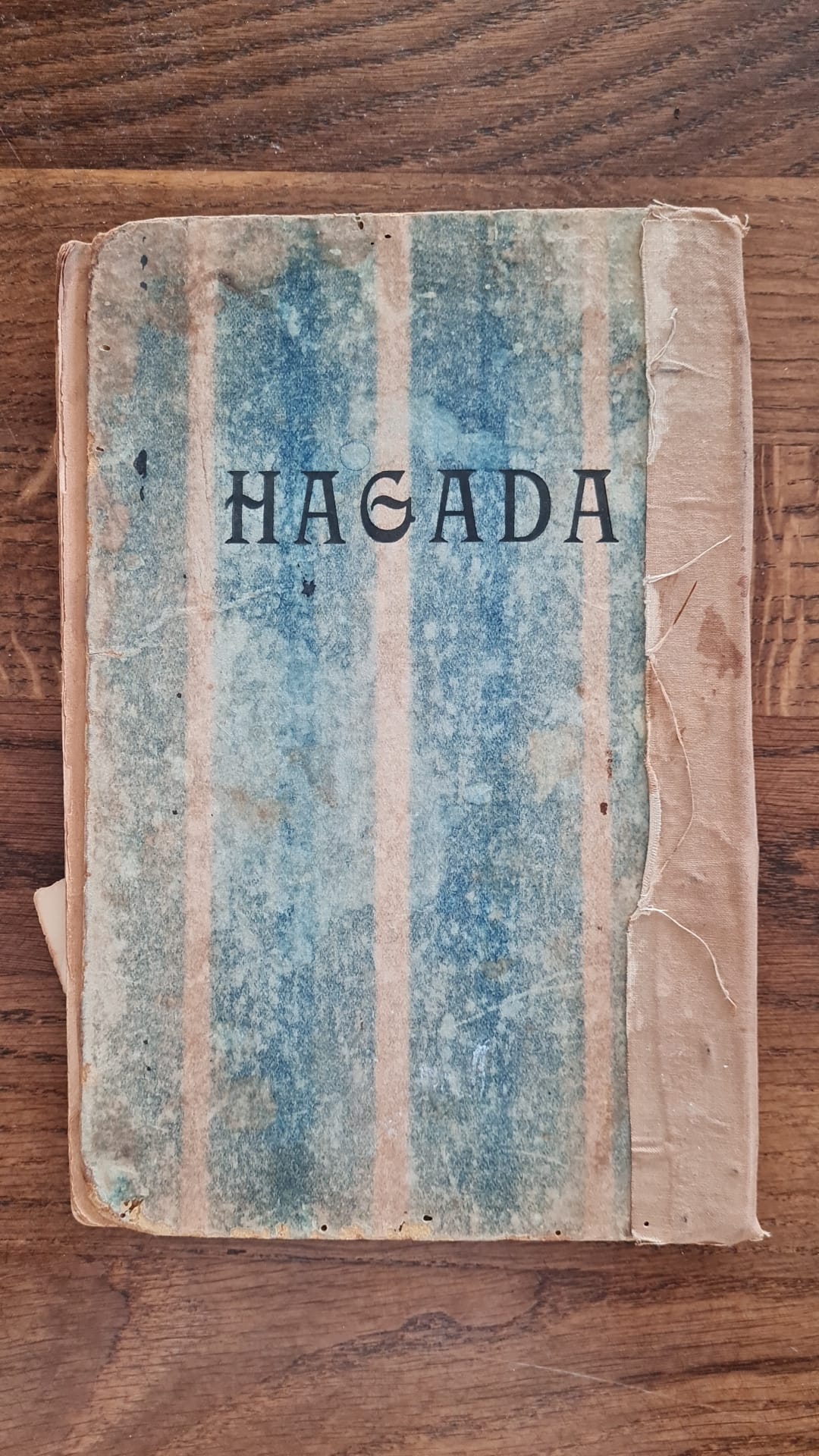
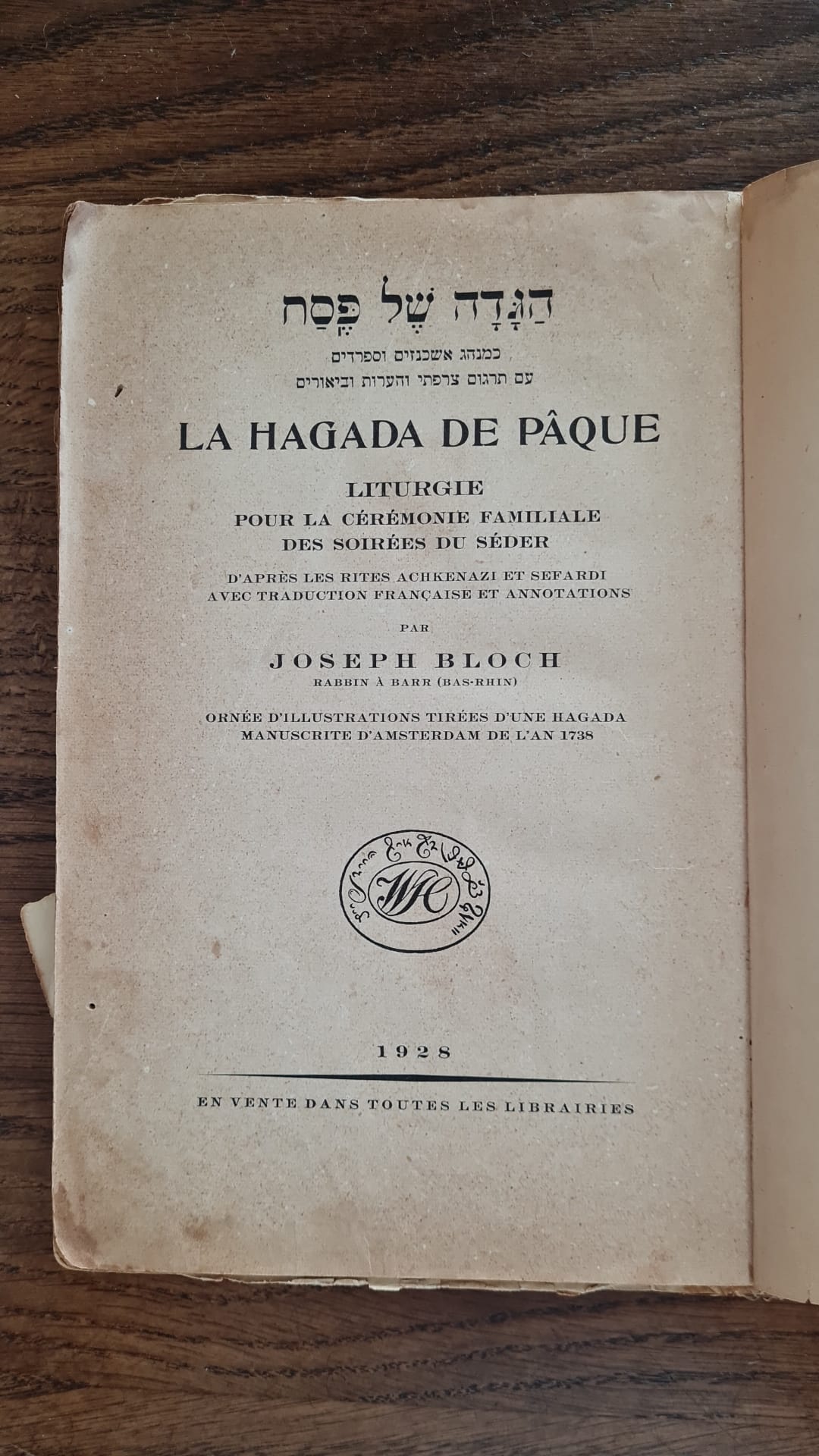
Yudlov 3165 Haggadah Roedelheim 1928 2
Yudlov 3165 Haggadah Roedelheim 1928 2
Haggadah Presented to Bernard Rovinsky, Future Educator and Victim of Convoy 73
Haggadah shel Pesaḥ, Rödelheim, 1928
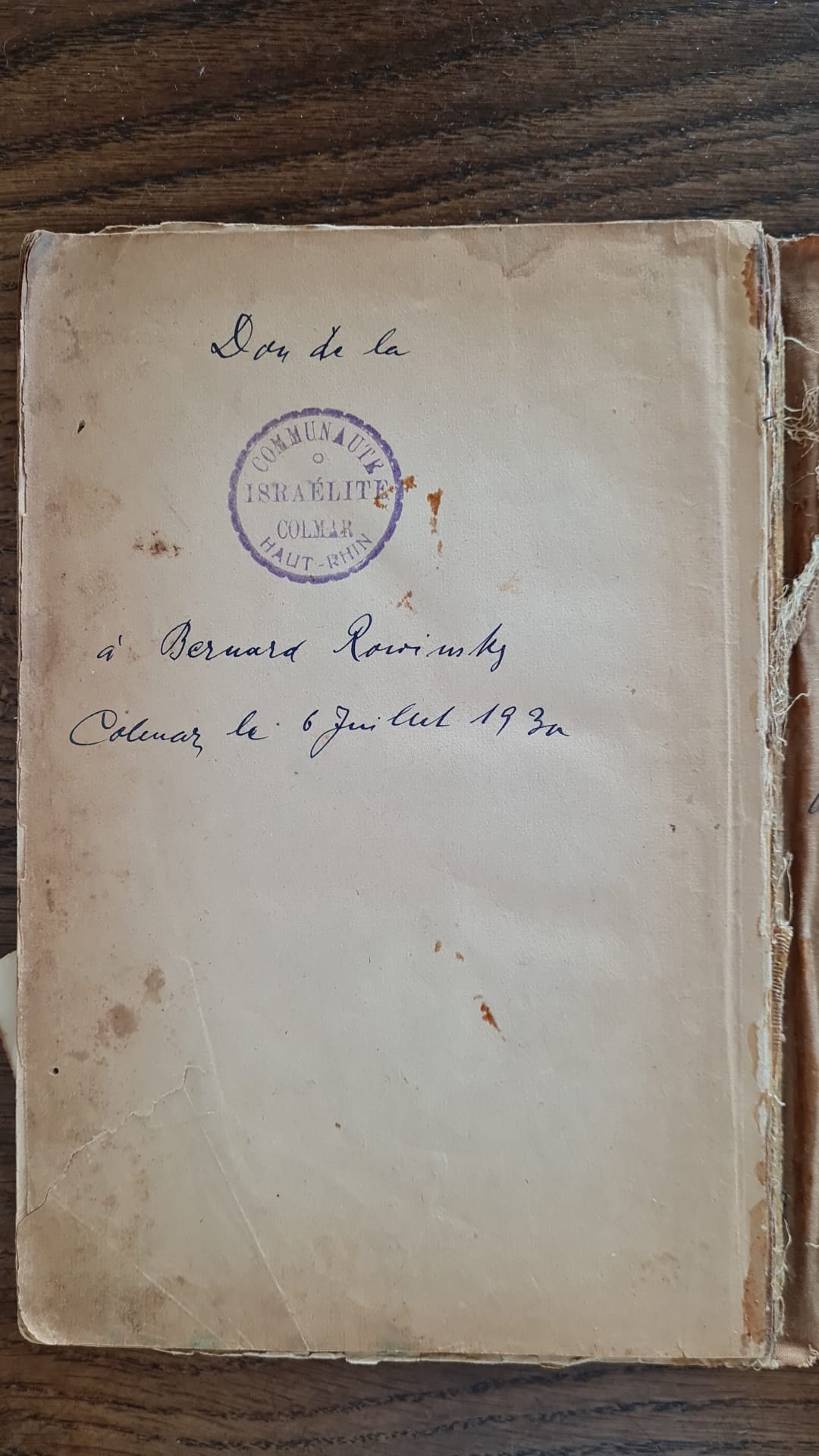
Presentation inscription dated 6 July 1934
Stamped: Communauté Israélite de Colmar (Haut-Rhin)
Inscription
The front endpaper bears a handwritten presentation inscription:
Don de la Communauté Israélite de Colmar à Bernard Rovinsky
Colmar, le 6 juillet 1934
The page is additionally stamped with the official seal of the Jewish Community of Colmar.
This inscription identifies the recipient as Bernard (Boruch) Rovinsky, one of the most remarkable young members of the Orthodox Jewish community of Colmar in the years before the Holocaust.
The Rovinsky Family
Bernard Rovinsky was born on 11 November 1923 in Svätý Jur (then Czechoslovakia, today Slovakia). While still a small child he moved with his family to Colmar, Alsace, where he spent his childhood and adolescence.
His father, Ephraïm Rovinsky, served as the community’s shoḥet (ritual slaughterer) and ḥazzan (cantor). Contemporary accounts describe him as a respected figure known for his strict Orthodox observance. Bernard’s mother, Yolande Rovinsky, was remembered for her generosity, hospitality, and devotion to Jewish education. Together they raised seven children in a deeply traditional Jewish home.
The surviving sources specifically identify several of Bernard’s siblings:
- Myriam Rovinsky
- Simon (“Schimi”) Rovinsky
- Jacques (“Toto”) Rovinsky
- at least three additional siblings not named in the principal testimony.
A Gift to a Promising Student
When this Haggadah was presented in July 1934, Bernard was ten years old.
Already as a child he was recognized as exceptionally gifted. Besides his secular studies, he received advanced Jewish instruction from the Grand Rabbi of Colmar, Rabbi Ernest Weill. Friends and contemporaries later recalled that his knowledge of Torah and Talmud far exceeded that of most youths his age.
One witness remembered that Bernard organized a miniature “Jewish community” among local boys, assigning roles such as rabbi, cantor, and beadle while encouraging Torah study and communal responsibility.
It is therefore highly plausible that this Haggadah was awarded as a school prize, educational gift, or communal presentation recognizing his promise and dedication.
Flight from Alsace
Following the outbreak of war and the evacuation of Alsace, the Rovinsky family relocated to Limoges in southern France. There Bernard continued both his studies and his teaching.
At the Petit Séminaire Israélite de Limoges (PSIL) he became one of the institution’s young teachers despite still being in his teens. Former students later recalled his extraordinary ability to explain complex Talmudic and biblical subjects with clarity and enthusiasm.
By 1943 he had joined the network of children’s homes directed by Rabbi Schneerson in the Isère region. There he served as educator and counselor to younger Jewish refugees.
Arrest at La Martellière
In March 1944 Bernard was responsible for a children’s home at La Martellière, near Voiron.
On the evening of 22 March 1944, his sister Myriam brought his younger brothers Simon (14) and Jacques “Toto” (7) to spend the night with him. During the early hours of the morning, Gestapo officers accompanied by French militiamen raided the house and arrested the Jewish youths living there. Bernard and his two younger brothers were among those captured.
The Fate of the Three Brothers
The brothers were separated.
Simon and Jacques Rovinsky were deported to Auschwitz on Convoy 71 and never returned.
Bernard Rovinsky, because of his age, was selected for the infamous Convoy 73, which left Drancy on 15 May 1944.
Convoy 73
Convoy 73 occupies a unique place in the history of the Holocaust in France.
Unlike almost all deportation transports from Drancy, it was not sent to Auschwitz. Instead, its 878 Jewish male prisoners were deported eastward to the Baltic states, primarily Kaunas (Kovno), Lithuania, and Tallinn (Reval), Estonia. The reason for this unusual destination remains uncertain.
The deportees were subjected to brutal forced labor, imprisonment, and mass murder. Of the 878 men deported on Convoy 73, only about 22 survived the war.
Bernard Rovinsky did not survive.
Shortly before his deportation he wrote from Drancy expressing hope that he would be reunited with his loved ones after the war, a moving reminder of the optimism still possessed by many victims even in the darkest circumstances.
Significance of this Haggadah
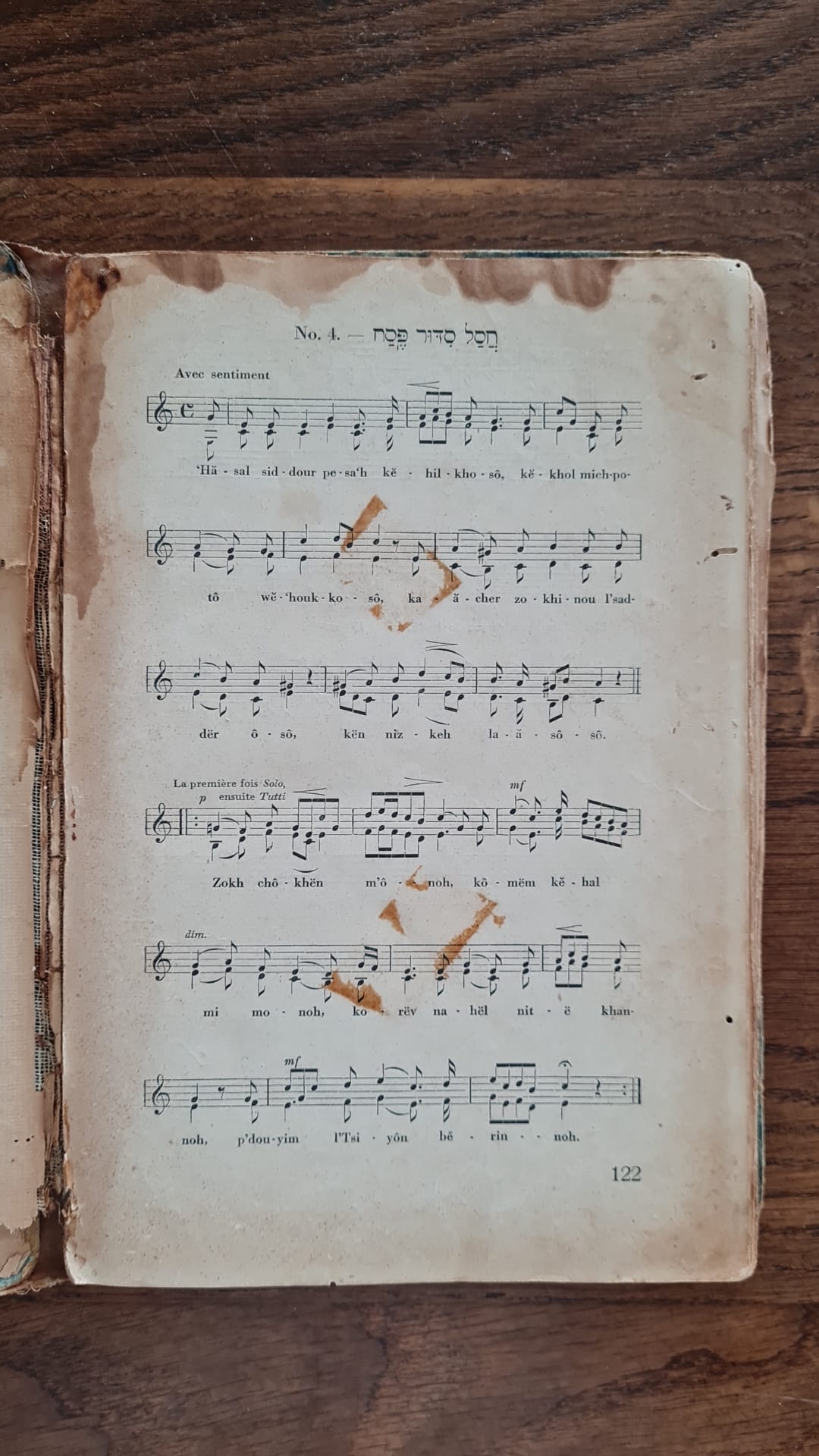
The 1928 Rödelheim edition itself is a relatively common Haggadah. What makes this copy exceptional is its provenance.
The book preserves:
- an original presentation inscription,
- the official stamp of the Jewish Community of Colmar,
- direct ownership by Bernard Rovinsky,
- association with one of the best-known Orthodox Jewish families of prewar Colmar,
- and a documented connection to a victim of Convoy 73.
As such, it survives not merely as a liturgical book, but as a tangible witness to a gifted young scholar, educator, and future communal leader whose life was destroyed during the Holocaust.
SPECIAL
HOLOCAUST
IRONID


