 arielwp@yahoo.com
 arielwp@yahoo.com


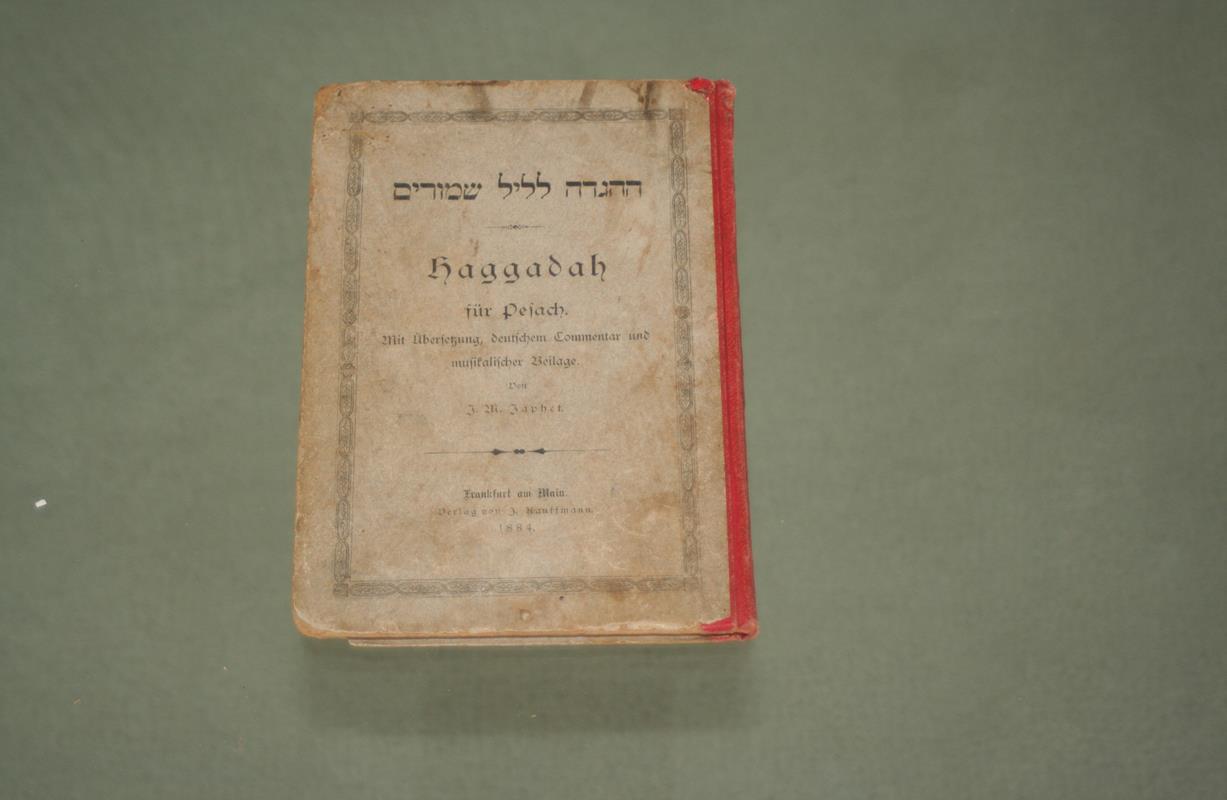
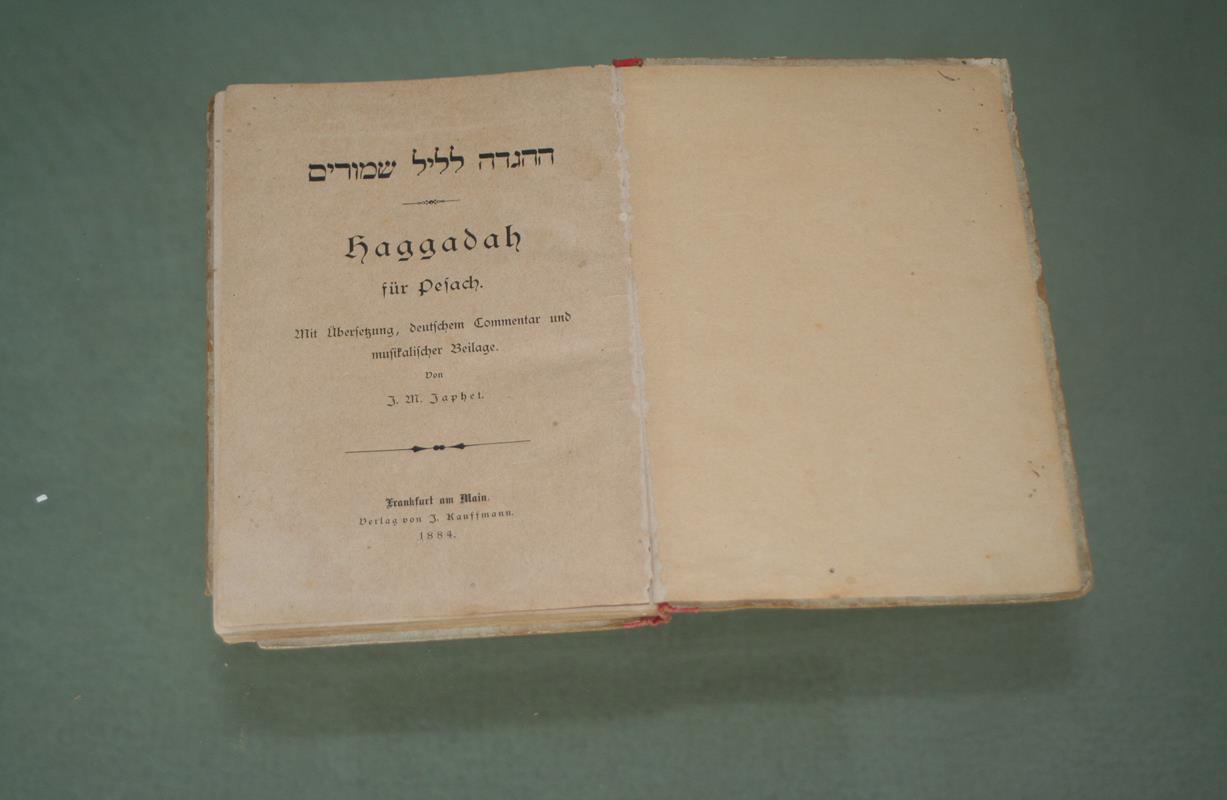
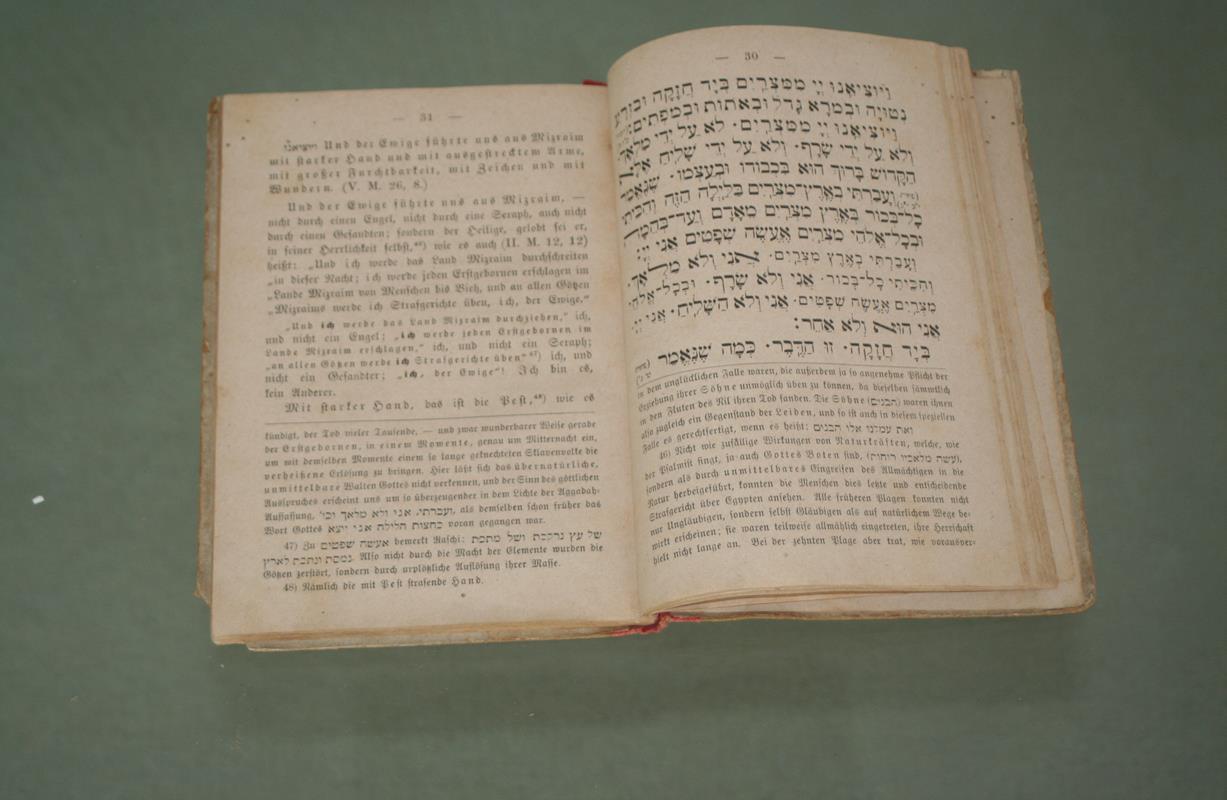
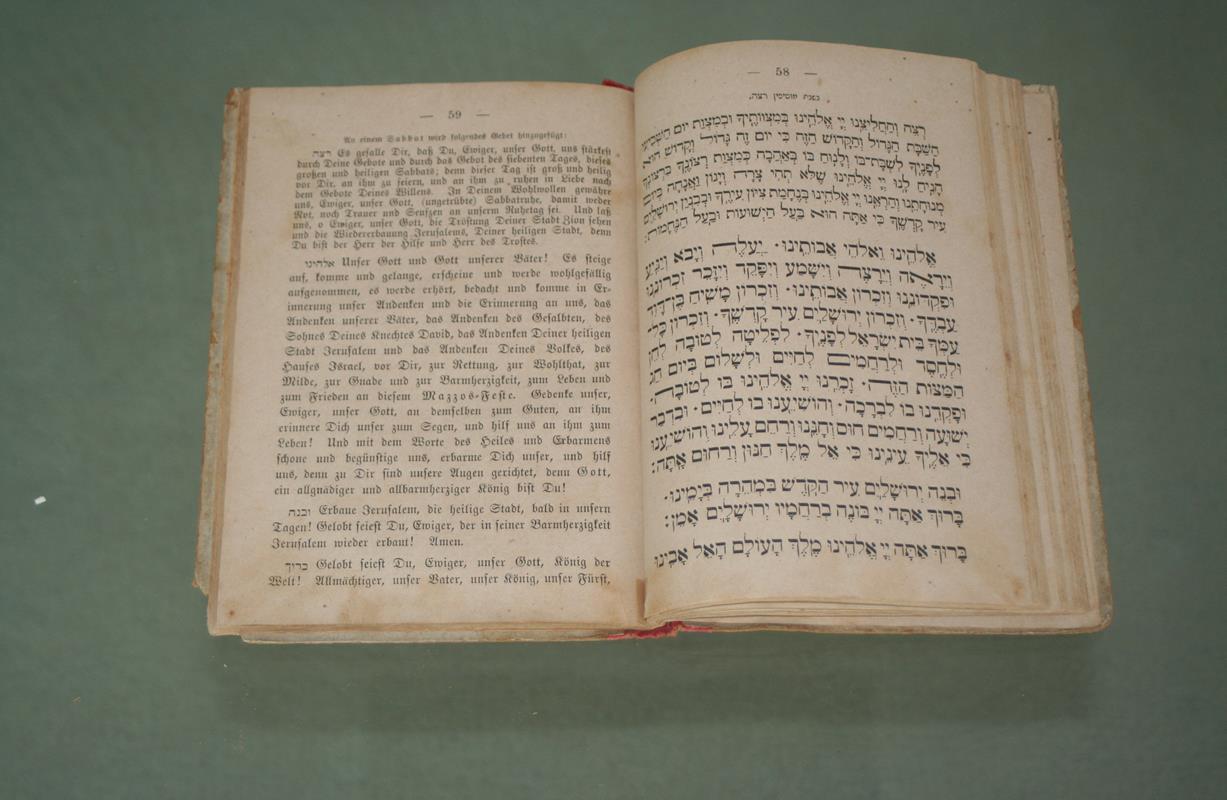
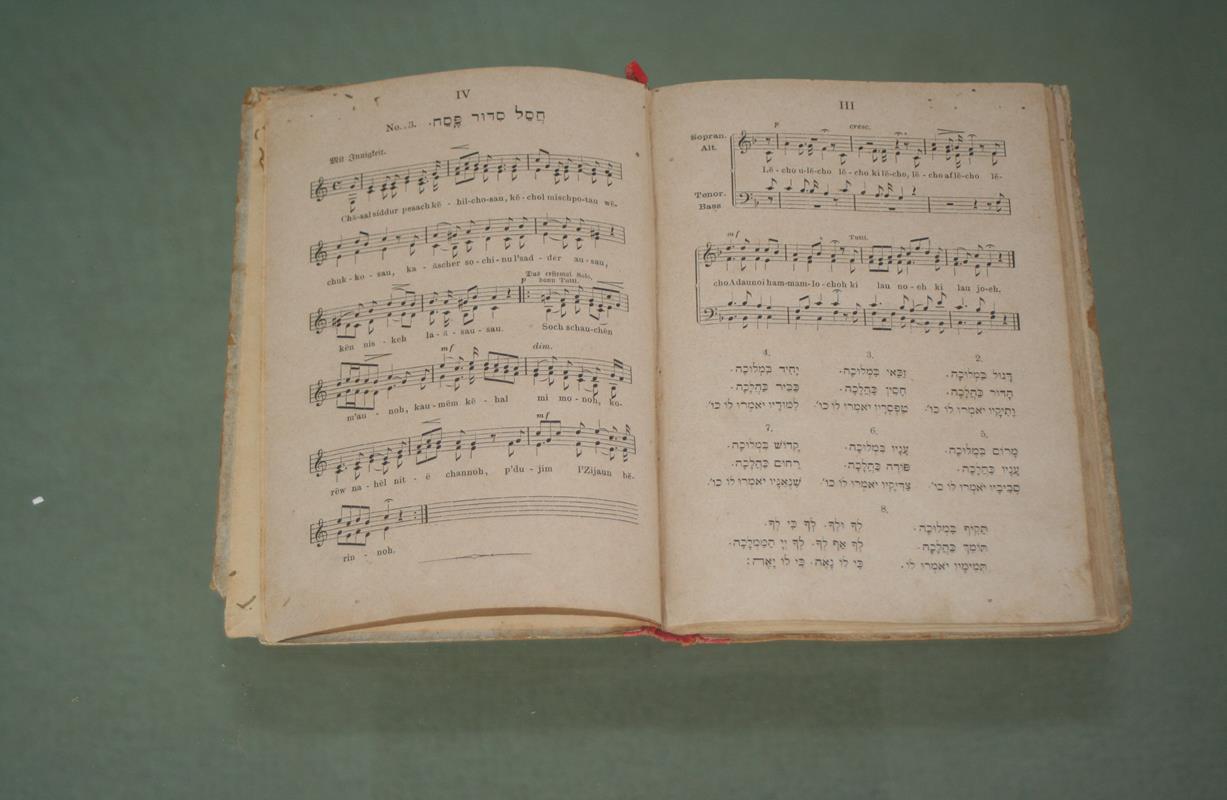
Yudlov 1648 Haggadah Frankfurt 1884
Yudlov 1648 Haggadah Frankfurt 1884
Author: J M Japhet
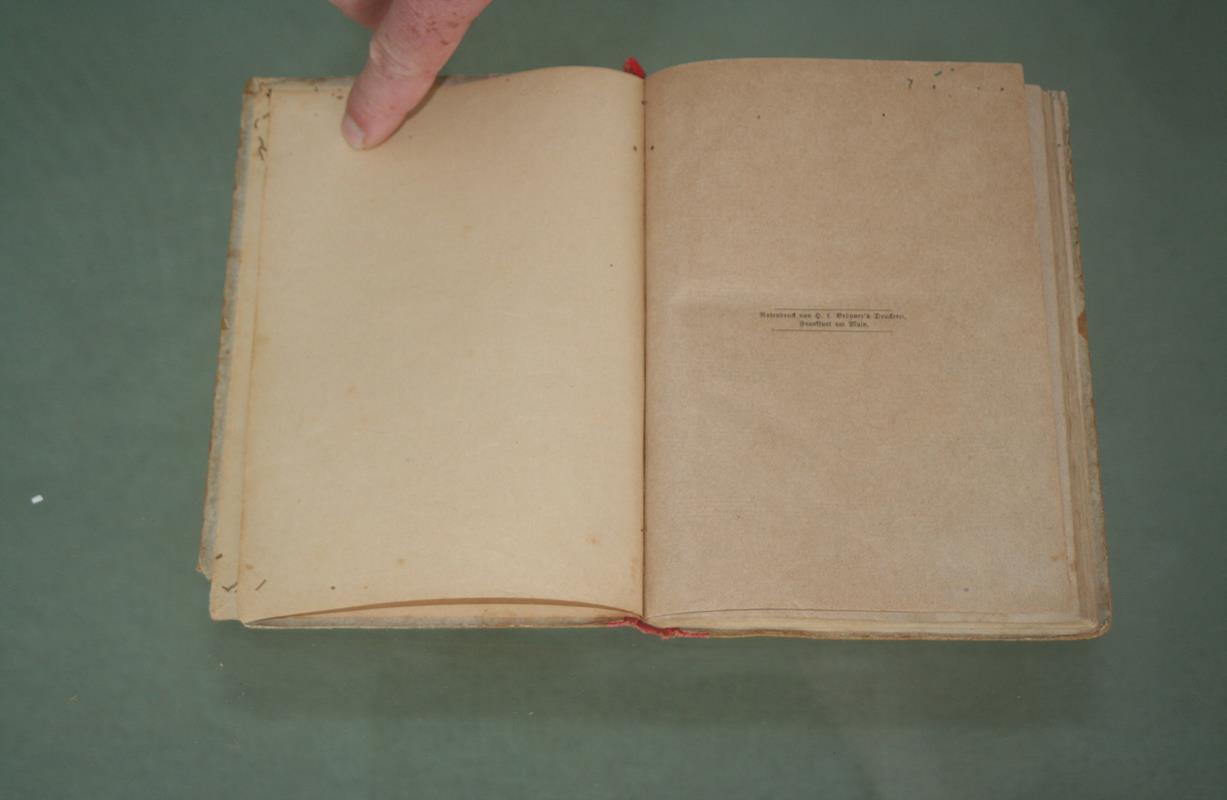
Publisher: J. Kauffmann
German Family Haggadah of the Franken Family
Germany, transferred 3 March 1901
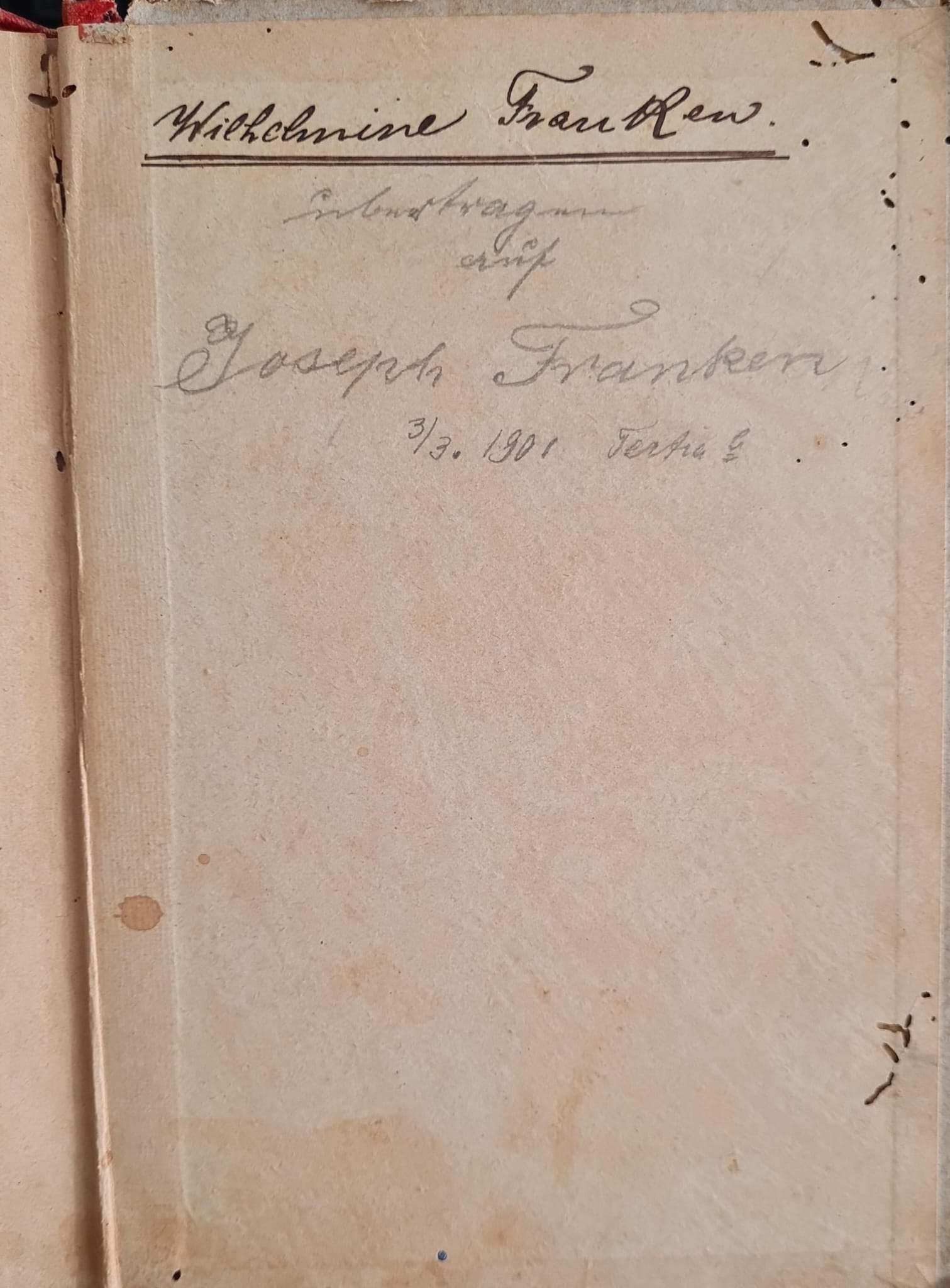
This Passover Haggadah preserves a remarkable link to the world of educated German Jewry in the years before the Holocaust. Written inside the volume are ownership inscriptions connecting the book to the Franken family, likely part of the assimilated Jewish middle class of western Germany.
The inscriptions read:
Wilhelmine Franken
below it:
übertragen auf Joseph Franken
3/3 1901 Tertia B
Translated, this means:
“Transferred to Joseph Franken, 3 March 1901, Tertia B.”
The inscription suggests the formal passing of the Haggadah from Wilhelmine Franken to Joseph Franken, in Tertia B, a class level in the German Gymnasium system, indicating that Joseph was about thirteen years old.
Research suggests a possible connection between this inscription and the documented German-Jewish jurist Joseph Franken (born 1887) of the Rhineland region. Although the identification cannot be proven conclusively, the age, social background, educational setting, and family names correspond strikingly well.
Joseph Franken was born into an established Jewish family in the Lower Rhine region of Germany and received the classical Gymnasium education typical of the educated Jewish bourgeoisie of the Kaiserreich. He studied law and rose to become a respected jurist during the Weimar Republic, serving in the German legal system at a time when Jews were increasingly integrated into German professional life.
Following the Nazi rise to power in 1933, Franken—like many Jewish professionals—was gradually stripped of his position and civil rights. During the anti-Jewish violence of Kristallnacht in November 1938, he was arrested and imprisoned in the Dachau concentration camp. His detention there formed part of the Nazi regime’s campaign to terrorize Jewish intellectuals, businessmen, lawyers, and community leaders into emigration.
After his release, Franken succeeded in escaping Nazi Germany, eventually reaching Mandatory Palestine. Like many German Jewish refugees, he was forced to rebuild his life after losing both homeland and career.
Remarkably, after the Second World War he returned to Germany, where he again entered public legal service and eventually became a senior judge. His postwar career reflected the complicated and often painful relationship between surviving German Jews and the country that had persecuted them.
Seen in this light, the Haggadah becomes far more than a ritual object. It emerges as a silent witness to:
- the cultivated world of prewar German Jewry,
- the importance of education and family continuity,
- the destruction of Jewish life under Nazism,
- and the resilience of survivors who rebuilt their lives after catastrophe.
Whether or not the Joseph Franken of the inscription can ultimately be identified with complete certainty as the later jurist, the connection remains highly plausible and historically compelling. The volume preserves a tangible trace of a German Jewish family passing tradition from one generation to the next on the eve of a century that would transform their world forever.
SPECIAL
HOLOCAUST
IRONID


