 arielwp@yahoo.com
 arielwp@yahoo.com


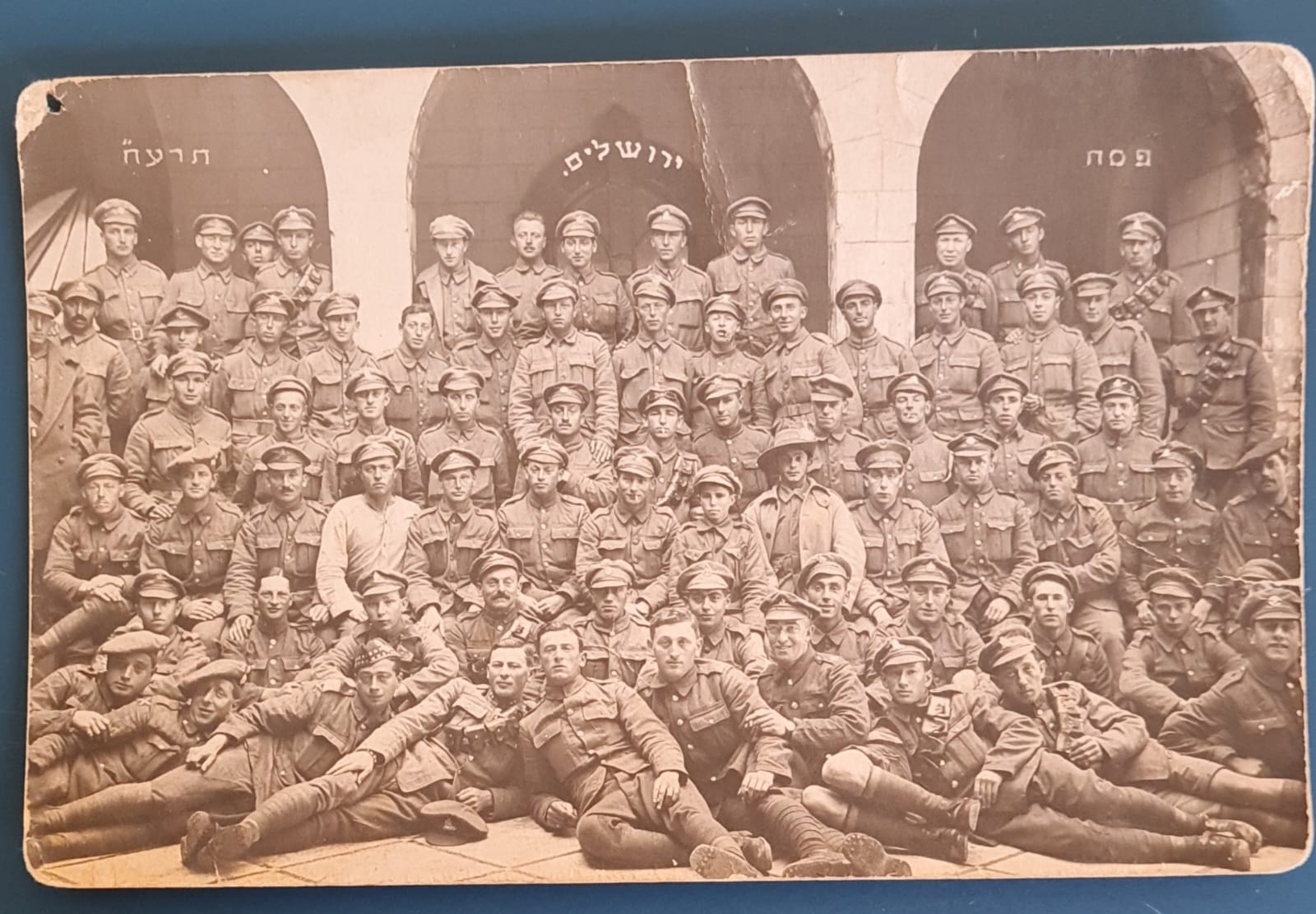
POSTCARD Jewish Legion Jerusalem Passover 1918
POSTCARD Jewish Legion Jerusalem Passover 1918
First time in 100s of years that Jewish soldiers were able to celebrate Passover in Jerusalem!
One of the most intriguing figures in this Passover 1918 photograph is the officer seated prominently near the front center, who I believe is Ze’ev Jabotinsky. The identification remains tentative, but several independent details make it historically plausible. Although the 38th Battalion of the Royal Fusiliers spent Passover 1918 at Helmieh in Egypt, contemporary evidence shows that Jabotinsky had gone ahead to Palestine independently. In letters written from Cairo in March 1918, he expressed his determination to reach Palestine before the Zionist Commission in order to encourage Jewish enlistment, and contemporary testimony places him in Palestine during Passover itself.
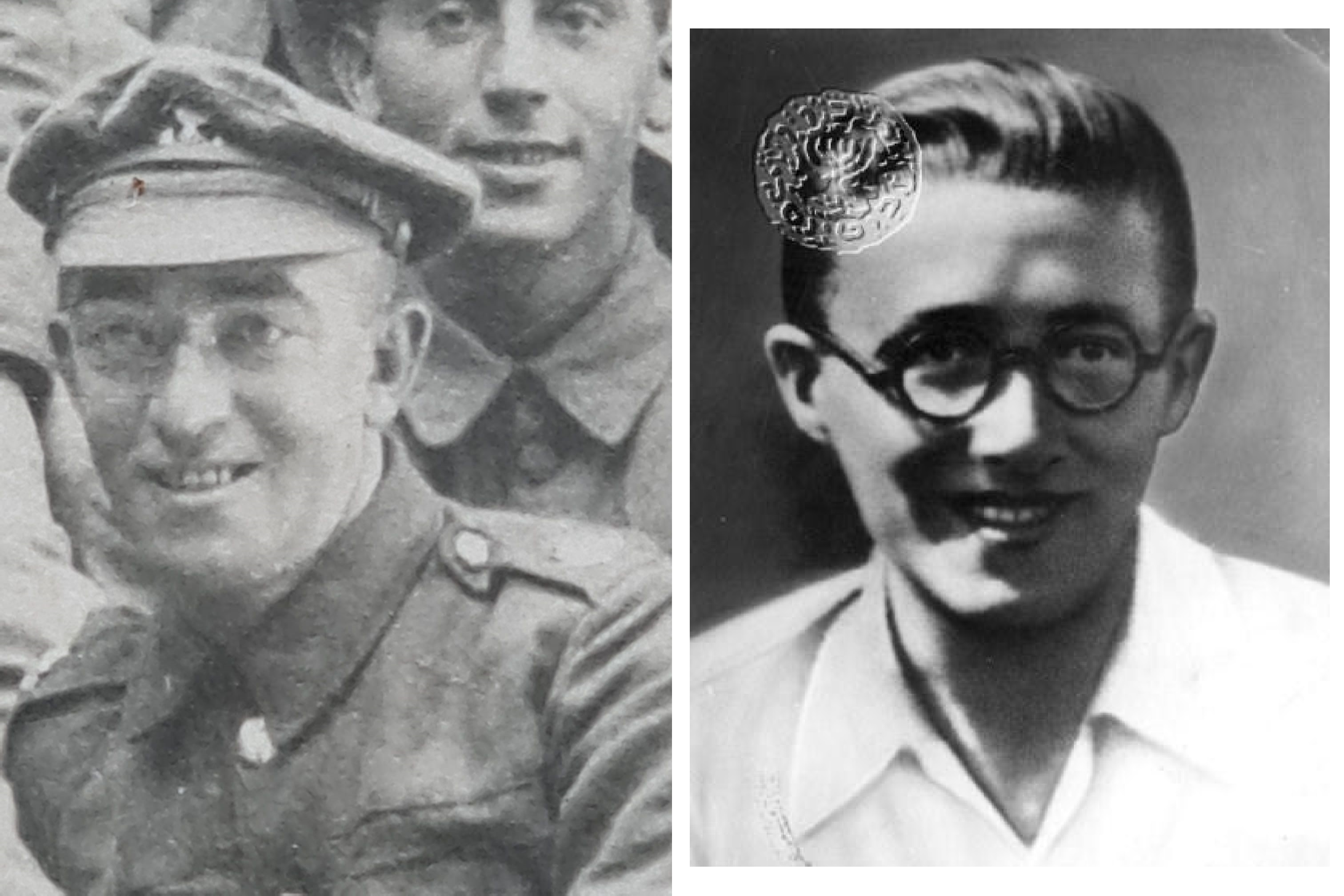
The officer is dressed in a uniform compatible with British service in Palestine and wears a cap badge whose form is consistent with a fusilier badge. He is also wearing rimless spectacles of the type Jabotinsky used, and is photographed holding a cigarette; Jabotinsky is independently documented as a cigarette smoker. His prominent position in a large Jerusalem Passover gathering of Jewish servicemen is also noteworthy given Jabotinsky’s role in organizing Jewish military recruitment at precisely this moment. None of these details proves the identification individually, but taken together with the known chronology of Jabotinsky’s movements, they make his possible presence in this photograph particularly compelling. Also, below a side by side with a confirmed picture of him smiling(he was much younger but it is haaaard to find a picture of him smiling). Just as a thought, Passover was important to Jabotinsky. Already in 1911, seven years before this photograph, Jabotinsky wrote an entire essay called “The Four Sons”, explicitly built around the Passover Seder. This wasn’t a casual holiday column. He used the Exodus story to explain his whole conception of Jewish history: exile, persecution, maintaining Jewish identity, self-respect, national revival and the return to Eretz Israel. When discussing the “simple son,” for example, he tells the father to explain how the Jewish national will is being rebuilt and how Hebrew-speaking children are growing up in Eretz Israel; the result, he says, will be that another fighter is added to the national camp. IMAGINE having the opportunity to participate in what would probably be the first Passover in Jerusalem for Jewish Soldiers in hundreds of years!!!
SPECIAL
SOLDIERS


