 arielwp@yahoo.com
 arielwp@yahoo.com


PAMPHLET Zejer Yetziat Mitzraim Netherlands Zionist Society 1941
PAMPHLET Zejer Yetziat Mitzraim Netherlands Zionist Society 1941
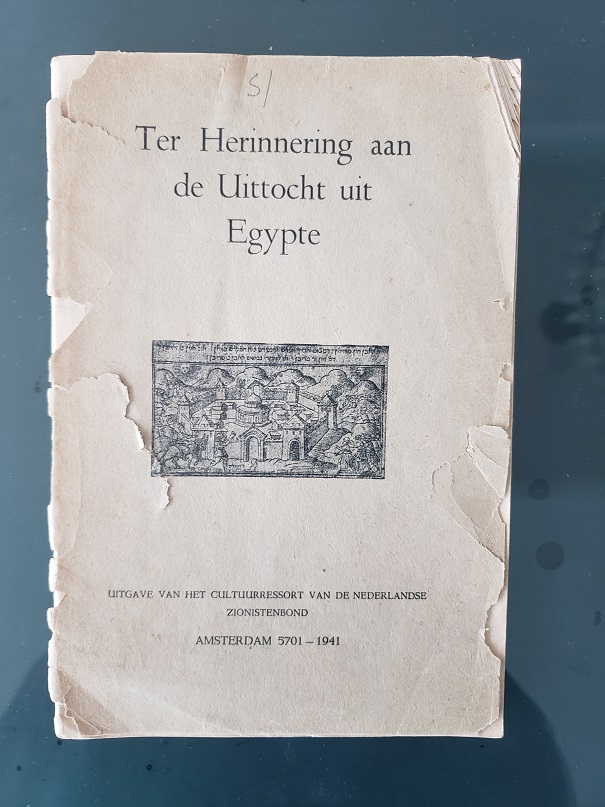
Ter Herinnering aan de Uittocht uti Egypte
The 1941 Exodus Booklet of Murdered Dutch Chief Rabbi Philip “Uri” Frank
Overview
-
- Object Type: Wartime Literary Booklet & Custom Ex-Libris (Bookplate)
- Title: Ter Herinnering aan de Uittocht uit Egypte (“In Memory of the Exodus from Egypt”)
- Publication Date: Spring 1941 / Hebrew Year 5701
- Provenance: From the looted personal library of Rabbi Philip “Uri” Frank (1910–1943), Chief Rabbi of North Holland.
The Booklet: A Beacon of Hope Amidst Occupation
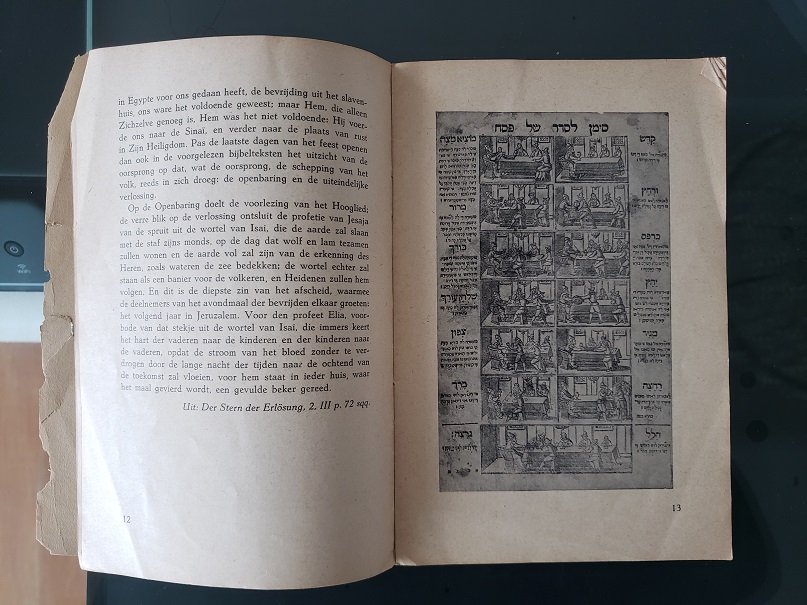
Published in Amsterdam in the spring of 1941, this 32-page Dutch booklet is a rare compilation of essays, poetry, and philosophy curated specifically for the Passover festival. It was compiled by Jozeph Melkman (later Michman, a renowned historian of Dutch Jewry) and published by the Cultural Department of the Netherlands Zionist Federation (Cultuurressort van de Nederlandse Zionistenbond).
Its publication date holds profound, dark significance. Printed just months into the German occupation of the Netherlands—and shortly after the anti-Nazi February Strike of 1941—the booklet’s core subject matter was an act of quiet spiritual resistance. By compiling texts centered entirely around the Exodus (the biblical narrative of liberation from tyranny and slavery), the publishers provided the heavily persecuted Dutch Jewish community with a message of enduring faith and ultimate redemption. The front cover features a historical woodcut depicting an enclosed biblical city.
The Ex-Libris: A Mirror to the Owner’s Soul
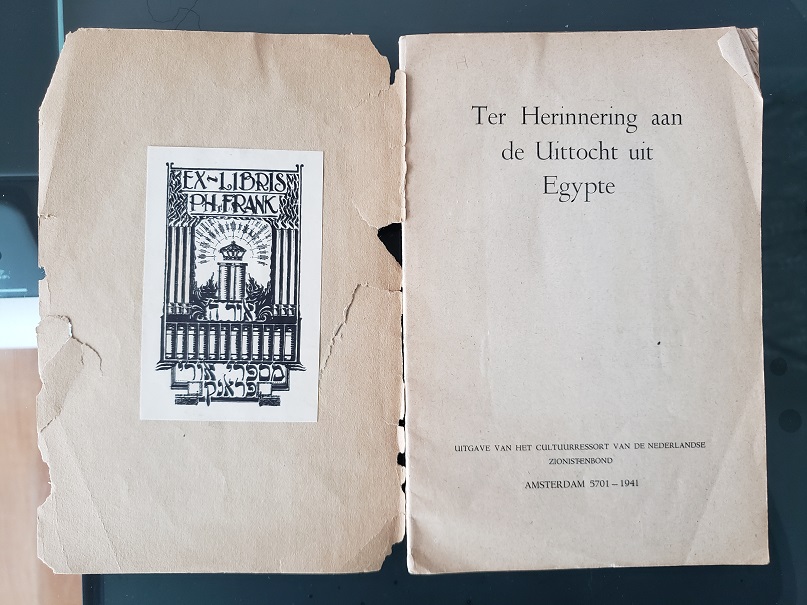
Affixed to the inner cover is the custom bookplate of the book’s owner, Ph. Frank. Executed in a striking, high-contrast woodcut style popular in the interwar period, the bookplate features deep layers of personal meaning:
-
- The Text: The top reads “Ex-Libris Ph. Frank”, while the bottom features the Hebrew inscription “Miseferei Uri Frank” (מספרי אורי פראנק)—revealing his Hebrew name, Uri, which translates to “My Light.”
- The Iconography: At the center, a monumental structure resembling a Torah scroll shines brilliantly like a lighthouse, flanked by the pillars of the Temple.
- The Hidden Pun: Embedded directly into the architectural archway is the Hebrew phrase ה’ אורי (Hashem Uri / “The Lord is my light”), taken from Psalm 27:1. This verbatim scriptural quote serves as a beautiful, faithful play on his own name.
The Owner: The Tragic Story of Chief Rabbi Philip Frank
The true gravity of this artifact lies in the identity of its owner. Born on August 9, 1910, Philip “Uri” Frank was a brilliant young scholar who was appointed Chief Rabbi (Opperrabbijn) of Haarlem and North Holland in 1937 at the exceptionally young age of 27.
Known for his humility, he balanced his high rabbinic duties with personal actions. In the late 1930s, he worked tirelessly with the “Beth Joles” initiative to house Jewish refugees fleeing Nazi Germany, even adopting a young, unaccompanied German refugee girl into his own home at Ripperdapark 26. During the occupation, he joined the Central Cultural Commission of the Jewish Council, fighting to keep Jewish education and morale alive.
His life was cut brutally short. On January 30, 1943, a German officer was shot by resistance fighters in Haarlem. In immediate, bloody retaliation, German authorities rounded up 100 local hostages. On February 2, 1943, Chief Rabbi Frank, along with two other Jewish board members and seven other citizens, was taken to the dunes of Overveen and executed by a German firing squad. He was only 32 years old. Following his murder, his wife Bertha was deported to Auschwitz and killed, and his personal library was looted by Nazi forces.
Historical Significance
This booklet stands as a physical witness to a stolen life. It proves that Chief Rabbi Frank acquired, held, and read this text—a book completely dedicated to Jewish survival and the eventual downfall of dictators—while actively guiding his community through the darkest hours of the Nazi occupation. Today, it remains a powerful piece of registered Holocaust provenance and a monument to a revered spiritual leader.
SPECIAL
HOLOCAUST
IRONID


