 arielwp@yahoo.com
 arielwp@yahoo.com


Yudlov 289 Haggadah Amsterdam 1778 2
Yudlov 289 Haggadah Amsterdam 1778 2




Historical Context: Amsterdam & The Proops Press
During the 18th century, Amsterdam was the undisputed global hub for high-quality Hebrew typography. Blessed with civic religious tolerance and a thriving merchant class, the city’s Jewish community established presses whose craftsmanship was universally praised across Europe.
The Proops Printing House was founded in 1704 by Solomon ben Joseph Proops. It grew into the longest-running and most prolific Jewish printing dynasty in European history, operating continuously until 1849. Following Solomon’s passing, his sons and subsequent descendants, including Joseph Proops, maintained the press’s reputation for producing aesthetically superior liturgical books utilizing crisp, elegant typography.
Provenance & Custom Supralibros
This specific copy features unique physical elements that document its lifecycle within a prominent, historical private library collection.
1. The Ownership Label (Chasimat Baalut)
Affixed inside the book is a handwritten paper slip reading:
“ברוך אלי’ ב”ר צדוק הלוי ז”ל”
(Baruj Eli, Son of Rabbi Tzadok HaLevy, of blessed memory)
The trailing acronym ז”ל (Zichrono Livracha) establishes that this memorial label was systematically affixed to the volume by heirs or estate caretakers after his passing.
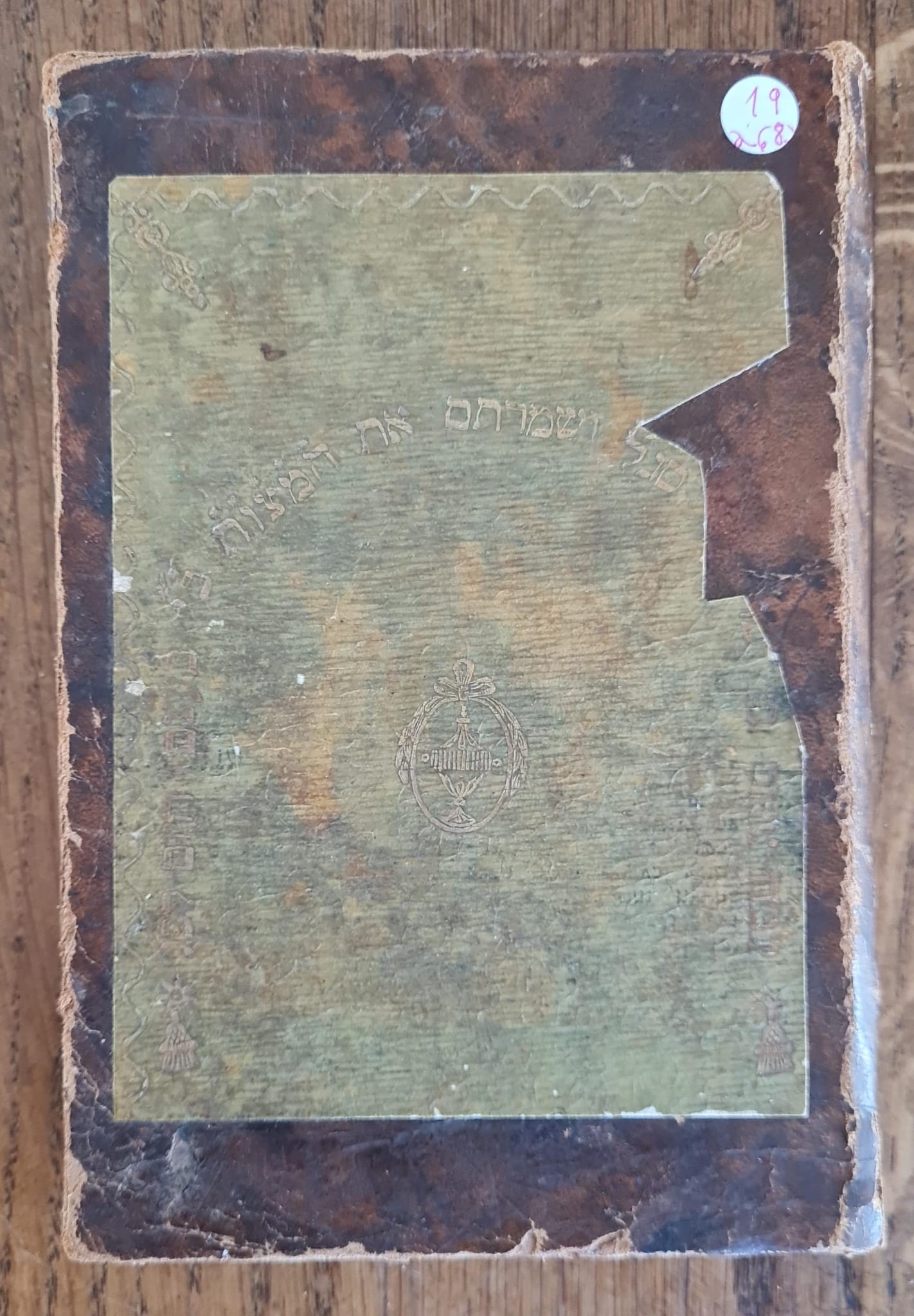
2. The Custom Gilt Cover Stamp
The leather binding features a custom, gold-gilded heraldic centerpiece (supralibros) executed in the Neoclassical style (characterized by its symmetrical laurel wreath and Louis XVI-style ribbon bow) popular in Western Europe between 1780 and 1830.
- The Levitical Ewer: Enclosed within the wreath is a poured pitcher over a basin, the traditional heraldic symbol indicating that the owner belonged to the Levite (HaLevy) lineage.
- The Rabbinic Epigraph: Stamped in gold around the wreath is the Hebrew biblical phrase from Exodus 12:17:
“ושמרתם את המצות”
(U’shmartem et ha’matzot / “And you shall guard the matzot”)
This specific text operates as a sophisticated rabbinic wordplay. In the Mechilta and commentary of Rashi, the Sages teach that because “matzot” (מַצּוֹת) shares a consonantal spelling with “mitzvot” (מִצְוֹת), the verse simultaneously mandates the prompt “guarding” and execution of all Divine commandments. The choice to engrave this exact phrase alongside the Levitical crest demonstrates advanced Torah literacy and substantial financial resources, as custom-cutting custom brass dies for library bindings was a luxury reserved exclusively for the affluent upper echelon of the Amsterdam community.
SPECIAL


