 arielwp@yahoo.com
 arielwp@yahoo.com


Yudlov 2683 Haggadah Berlin 1918 2
Yudlov 2683 Haggadah Berlin 1918 2
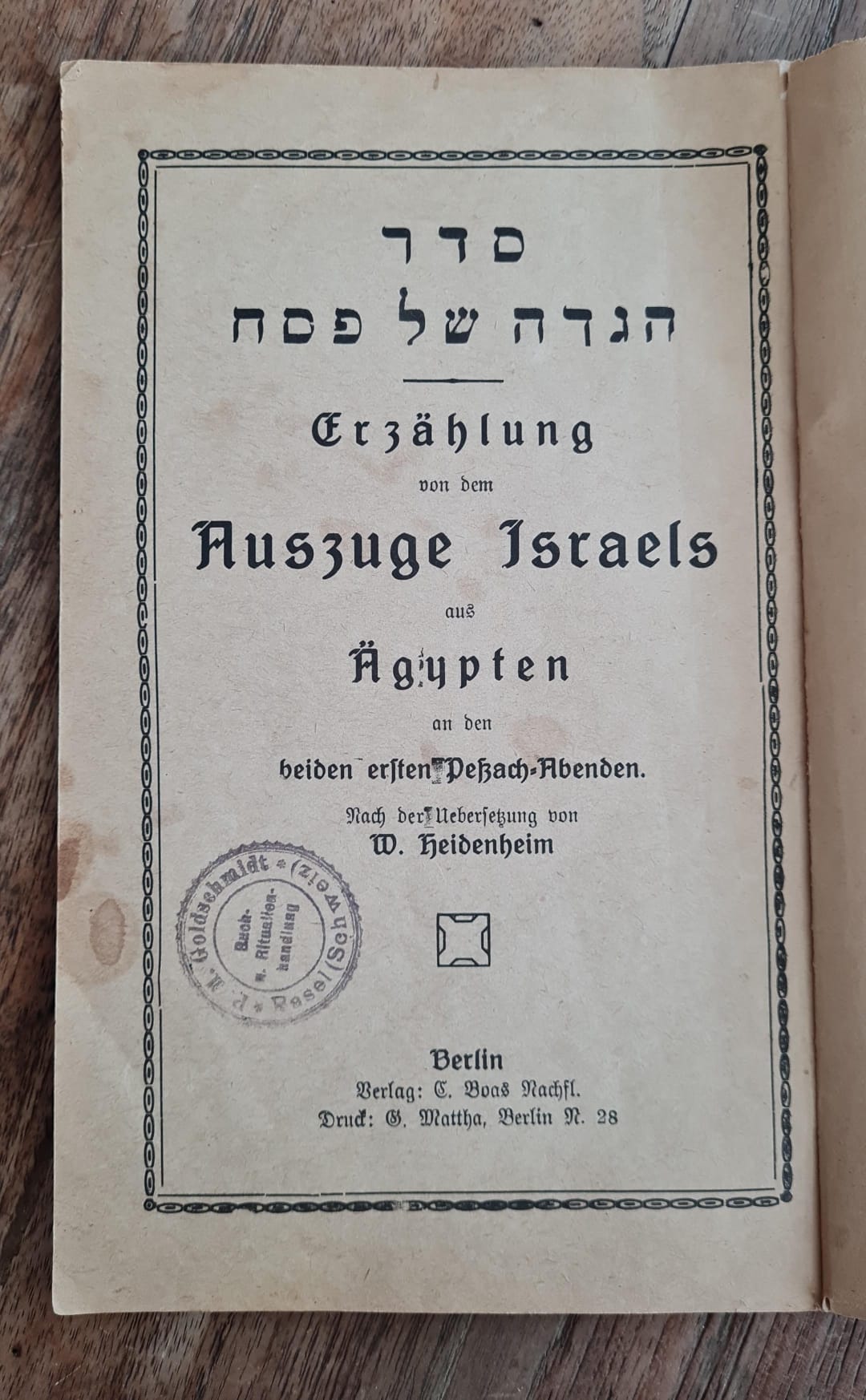
This Haggadah was published in Berlin in 1918 by C. Boas Nachfl. and printed by G. Matthä. What makes this specific one more interesting is the circular blue ink stamp on its title page:
* P. M. Goldschmidt * Basel (Schweiz) / Buch- u. Ritualienhandlung.In 1900, a young Lithuanian ritual scribe (Sofer) named Pessach Meir Goldschmidt arrived in Switzerland with nothing, initially sustaining himself as a private tutor. In 1902, he moved to Basel and risked everything to open a modest shop dedicated entirely to Hebrew literature and ritual items. Local shopkeepers openly scoffed, predicting the niche bookstore would bankrupt him within a month. Defying the skeptics, Goldschmidt secured the formal backing of Basel’s Rabbi Arthur Cohn, and the shop became a vital lifeline for Jewish texts.
Tragedy struck in 1923 when Pessach Meir died suddenly at just 47, leaving behind a widow and eight children. To save the family from financial ruin, his eldest son, Victor Pinches Goldschmidt, dropped out of school at the age of 17 to run the business.
Decades later, during World War II, Victor kept the shop operating as one of the last remaining pipelines for religious goods through strict Swiss customs. After the Holocaust systematically erased the Jewish printing infrastructure of Germany and Poland, Victor took a bold step: he expanded into publishing. He acquired the rights to the historic Rödelheim prayer books—the exact same Heidenheim translation found in this 1918 Haggadah—and printed them from safe haven in Basel. By doing so, he single-handedly supplied surviving refugees and reborn communities across Europe and South America with the liturgy they had lost.
Remaining in the family for three generations until 2013, the business is now recognized as the oldest active Jewish bookstore in the German-speaking world. This 1918 Haggadah stands as a physical testament to a family that started with nothing and ended up rescuing the printed heritage of European Jewry.
SPECIAL
HOLOCAUST
IRONID


