 arielwp@yahoo.com
 arielwp@yahoo.com


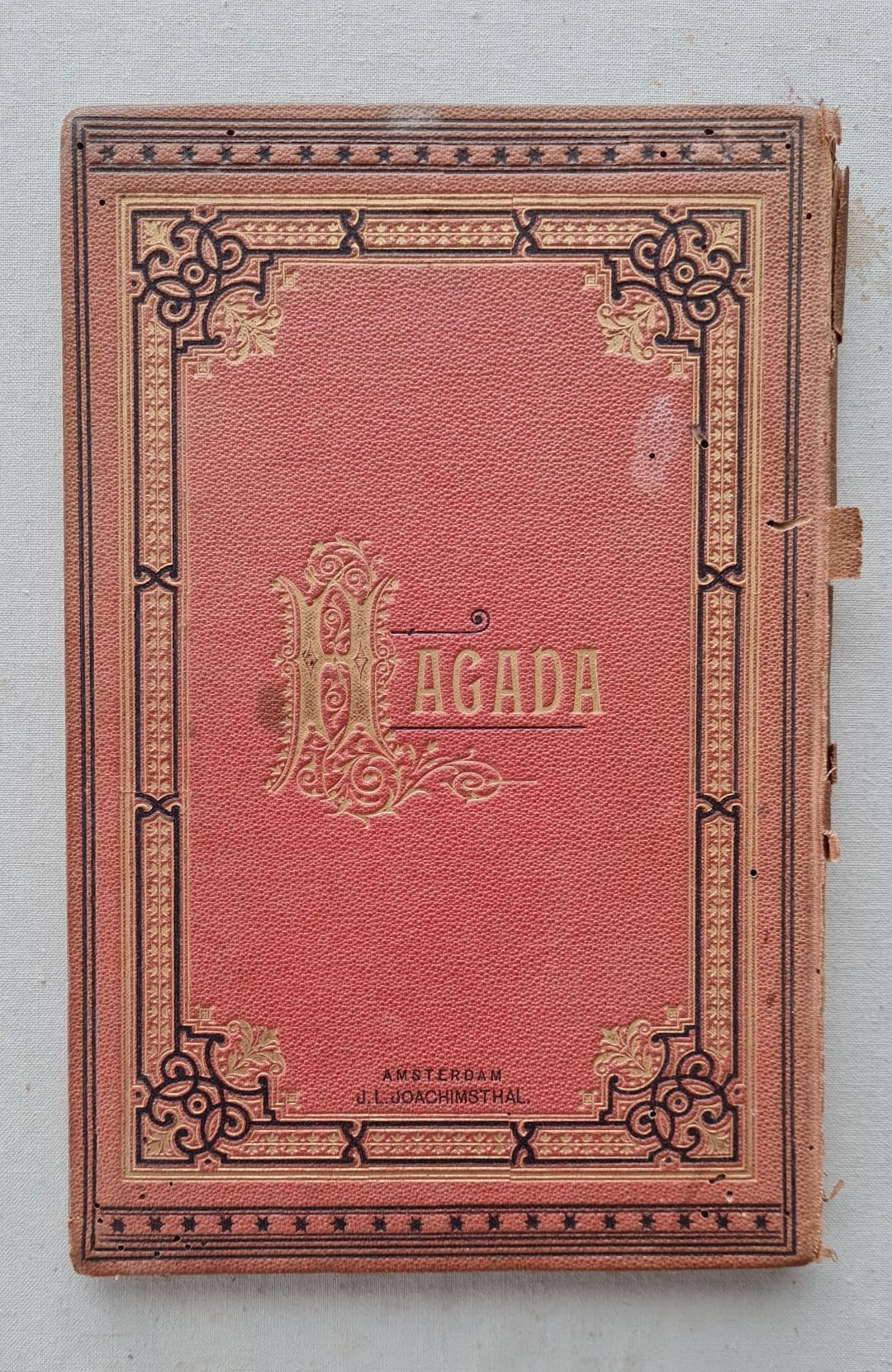
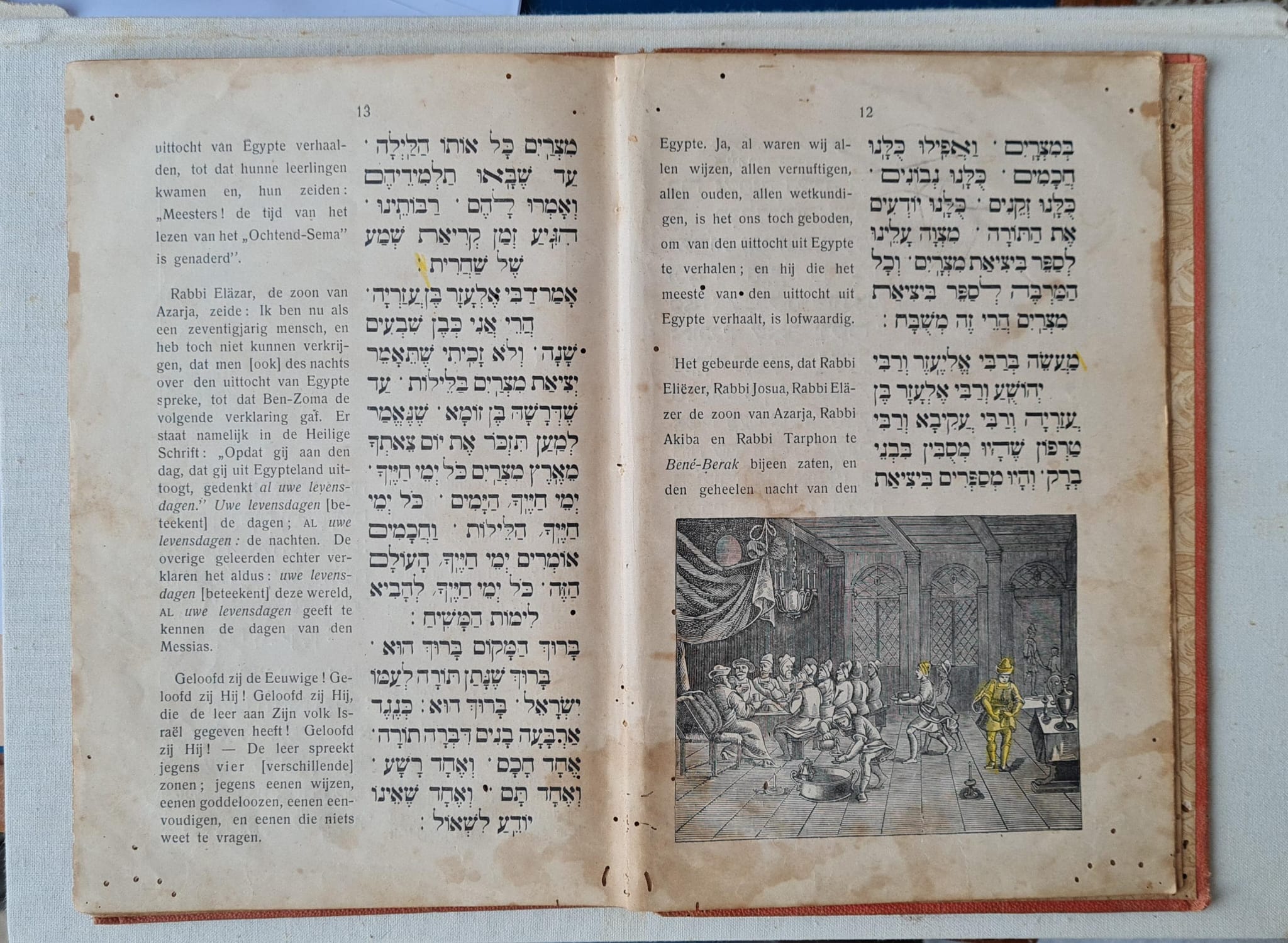
Yudlov 2697 Haggadah Amsterdam 1919
Yudlov 2697 Haggadah Amsterdam 1919
A Bar-Mitzvah Haggadah from the Lost Jewish Community of Winschoten dedication written in German:(read below the pictures)
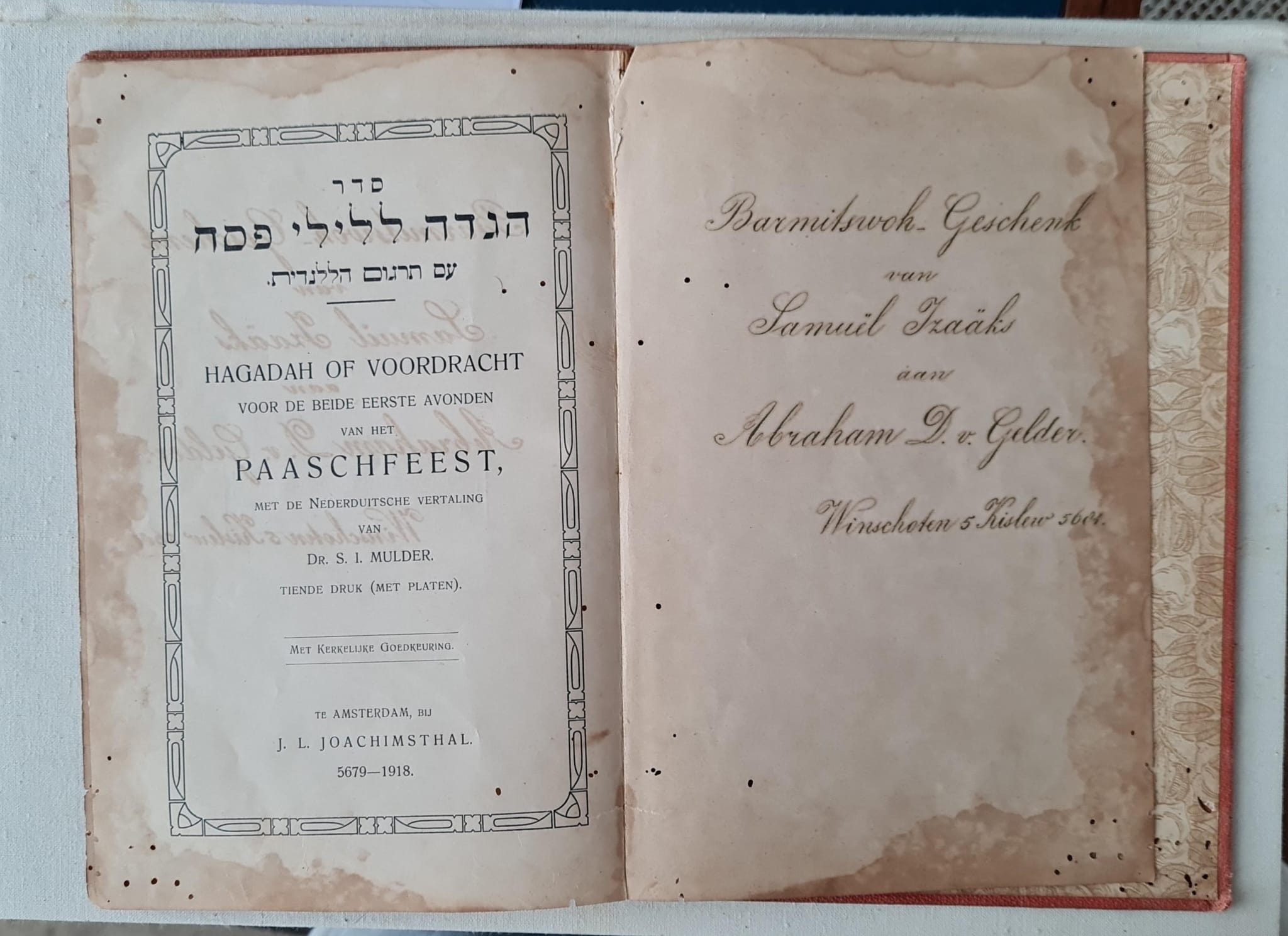
The first page of this Haggadah contains the following dedication:
“Barmiswoh-Geschenk von Samuel Izaaks an Abraham D. v. Gelder.
Winschoten, 5 Kislew …”
Translated simply, the inscription reads:
“Bar-Mitzvah gift from Samuel Izaaks to Abraham D. van Gelder.
Winschoten, 5 Kislev …”
Winschoten was once home to one of the largest Jewish populations in the Netherlands outside Amsterdam. Jewish families had lived there since at least the eighteenth century, and by the late nineteenth century the community had grown into a flourishing center of provincial Jewish life. Around 1900 nearly nine hundred Jews lived in the town. At the center of Jewish life stood the synagogue on Bosstraat, completed in 1854.
The inscription in the Haggadah names two individuals who served as religious educators in the Winschoten community.
The recipient of the gift, Abraham Joseph van Gelder (1870–1943), was the cantor and religious teacher of the synagogue. Trained at the Dutch Israelite Seminary in Amsterdam, he arrived in Winschoten in 1899 and served the community for decades. His responsibilities included leading the congregation in prayer, teaching Hebrew and Jewish law, and preparing boys for their Bar-Mitzvah.
Van Gelder lived with his wife Sibilla in a house on Bosstraat beside the synagogue itself.
The man who presented the Haggadah, Samuel Izaaks, also served as a religious instructor in the community. He lived nearby on the same street and worked with the synagogue’s youth, helping to educate the next generation of Jewish children.
The inscription describes the Haggadah as a “Bar-Mitzvah gift.” Although the exact circumstances remain unknown, the wording suggests a ceremonial presentation connected with a Bar-Mitzvah celebration.
In many Jewish communities it was customary to mark such occasions with the exchange of religious books. A beautifully printed Haggadah would have been an appropriate gift, symbolizing both Jewish learning and the continuation of tradition from one generation to the next.
The physical setting for these events was the Winschoten synagogue, a building that still stands today. During the early twentieth century it formed the center of a small cluster of Jewish communal buildings on Bosstraat.
Nearby lived the synagogue’s staff, including van Gelder and Izaaks.
A Community Destroyed
The story of the Haggadah inevitably leads to the tragic fate of the community that produced it.
During the German occupation of the Netherlands in World War II, the Jewish population of Winschoten was systematically deported.
Samuel Izaaks was deported and murdered in Auschwitz in 1943.
Abraham van Gelder and his wife Sibilla were deported and murdered in Sobibor the same year.
The community around the Winschoten Synagogue was never rebuilt.
SPECIAL
HOLOCAUST
IRONID


